Thursday, August 17, 2006

Facedown... by matt redman

“Welcomed in to the courts of the King
I’ve been ushered in to Your presence
Lord, I stand on Your merciful ground
Yet with every step tread with reverence

And I’ll fall facedown
As Your glory shines around
Yes, I’ll fall facedown
As Your glory shines around

Who is the in the heavens like You?
And upon the earth, who’s Your equal?
You are far above, You’re the highest of heights
We are bowing down to exalt You

And I’ll fall facedown
As Your glory shines around
Yes, I’ll fall facedown
As Your glory shines around

So let Your glory shine around
Let Your glory shine around
King of glory, here be found
King of glory”

and the glory of the LORD appeared to all the people. And fire came out from before the LORDand when all the people saw it, they shouted and fell on their faces (Leviticus 9:23, 24 ESV)

Therefore God has highly exalted Him and bestowed on Him the name that is above every name, so that at the name of Jesus every knee should bowto the gory of God the Father. (Philippians 2:9, 10, 11)

Holy, Holy, Holy is the LORD of Hosts; the whole earth is full of His glory! (Isaiah 6:3)

Read Complete Article...

Tuesday, August 01, 2006

Greatness

“For our appeal does not spring from error or impurity or any attempt to deceive, but just as we have been approved by God to be entrusted with the gospel, so we speak, not to please man, but to please God who tests our hearts. For we never came with words of flattery, as you know, nor with a pretext for greed – God is witness. Nor did we seek glory from people…” 1 Thessalonians 2:3-6a ESV


I desire to be great. I desire to be recognized. I desire to be published, quoted, requested to visit, speak, confer, and be consulted. I desire glory. Although these words may not find themselves expressed in their purest forms, the thoughts and attitudes that cause their utterances are almost always present. An unseen and unspoken war of the words transcribes that I dare not speak of lest I succumb to its forces. This imaginary force will not destroy me per se, but it might just destroy my reputation, my image, and my external appearance of humble piety. And thus the “me” of the internal never greets the “me” of the external for the outward perception is of utmost importance if my desire for greatness is to be achieved. Consequently, what is real is not what is seen and my existence is reduced to a moving picture of sorts – a life not mine, but an escape from authenticity that leaves me, well, reeling.

Honesty is the greatness of titanic extremes. As I plunge the depths of my soul and the inner caverns of my own heart, I must readily acknowledge with brutal honesty the reality of the seen and the unseen. A physician would be of no benefit to me if he were to diagnose my common cold and fail to reveal to me that the cause of my cold is a weakened immune system caused by a certain class of cancer. Cough drops or chemotherapy? There is hardly a justification for limiting the physician’s honesty of the examination. Therefore, in diagnosing a spiritual condition, I need not trivialize the assessment, but to invite and welcome its findings as a means of greater maturity; for to be great, I must first be honest.

All this held, one need not consult an expert in exegesis to understand the Biblical ramifications of pride in the heart of man. “God opposes the proud” (James 4:6). “Pride goes before destruction” (Pro 16:18). And was it not pride that caused the tempter to be cast from the glories of Heaven (Is 14:14-15) to a place where his simple statement “you will be like God” (Gen 3:5) invoked such a prideful desire that sin then entered the entirety of the human race for all generations to come before Christ comes again? And so, can I agree with Holy writ that my prideful desire for greatness based on my own merit is indeed sinful and wretched? Indeed. Can I observe from sacred Scripture that even those closest to the Lord Himself struggled with the improper desire for greatness to which the Lord responded, “whoever would be great among you must be your servant, and whoever would be first among you must be slave of all. For even the Son of Man came not to be served but to serve, and to give His life as a ransom for many” (Mark 10:43-45)? I must also concur with a resounding yes. And therefore, I trust that there is hope for me nonetheless.

The struggle with greatness is not altogether new, but each time it presents itself in cleaner clothes and with greater subtleties. This most recent occurrence came at a time with an opportunity to participate in the spreading of the Gospel of Christ and to truly affect His kingdom for His glory. Yet my heart was not in tune with the symphony of Scripture and my desire for greatness eclipsed my desire to see Him increase and me decrease. Under this conviction, I approached this passage in Paul’s letter to which I was required to respond with the honest sinfulness of my heart. Had I engaged in the opportunity I would not have done so to “please God who tests [my] heart” (1 Thess 2:4), but I would have done so in an effort to please man and to seek glory from people. It was not until I encountered this passage of Scripture that I was willing to openly admit my fault, yet my response was not proper. Rather than be honest with the organizer concerning the condition of my heart, I simply did not show up. Sin #1: Pride that led to the desire to be recognized as great. Sin #2: Pride that led to not honoring my commitment. Sin #3: Pride that led to my inability to be honest for fear that the true me might become exposed.

God in His grace that leads to conviction granted me the repentance to confess my fault before Him and He also graciously provided the opportunity to confess my wrongs to the two organizers. I ignored the command to “let my yes be yes” and honor my commitments despite the pain I may have to endure to reveal the darkness of my heart.

I can have greatness by the world’s standards, but it will come at the cost of honesty. If true honesty leads to greatness, may the Lord continue to guide me along that path. And, prayerfully, may my next appeal spring not from error or impurity or any attempt to deceive, but from a desire to please God, not man, for He is the One who tests my heart. May I seek His glory and His approval only, that I may be entrusted with the Gospel – the greatest gift of honest good news.

Read Complete Article...

Friday, July 21, 2006

Accountability

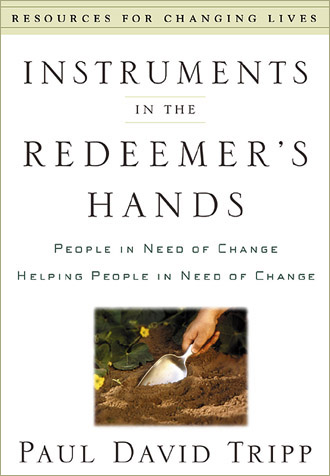
“Because we are worshipers by nature, we are always (1) giving proper worship to God, (2) serving something [or someone] else, or (3) worshiping ourselves, demanding to be the center of our own universe.”

- Paul David Tripp. Instruments in the Redeemer’s Hands: People in Need of Change Helping People in Need of Change. Phillipsburg, NJ: P&R
Publishing, 2002. p 46


In light of this reality, I need to ask myself these questions and then ask these questions of those who give me the passport of accountability:

1. This past week, have I given God proper worship in all areas of my life? (Mat 22:37)
2. Can I honestly say that I have done all things for God’s glory this week? What areas or situations could have been handled differently in order to align myself with the truth that I am to do “all for the glory of God” (1 Cor 10:31)? Are any of these things still good things, but just done out of improper motives? (Mat 6:1-8)
3. In what ways have I attempted to please other people at the expense of transferring my worship to them, their opinion, or their influence instead of worshiping Christ? (Gal 1:10; 1 Thess 2:2-6)
4. Which situations this week provided an occasion for me to choose between pride and humility? How did I choose? Was this the proper response? (Luke 14:11; James 4:6; 1 Peter 5:6) What Scripture passage can I refer to support my decision?
5. Have I sought forgiveness from the Lord for any of the above situations that resulted in my sin? Are any of the above situations sins that I need to confess to the individuals involved and seek their forgiveness and restoration in the relationship? (Mat 18:15-20). When am I going to walk through this process?
6. Is there a passage that I need to meditate on this week and apply that will cause me to respond more like Christ in any of the above situations? What steps am I going to take to make sure that I follow through with this commitment? (Mat 5:37) Who can I enlist to help me in this endeavor? (Pro 27:17; Gal 6:2)


Although these questions may not be new by nature, they may be new by application for my life. In discussing the nature and practicality of accountability over the last several weeks I have come to an understanding that I need to be more proactive and seeking accountability in my own life. The Lord has graciously chosen to provide for me brothers who are committed to seeking a greater relationship with Christ through the process of accountability. It has come a time when I need to utilize this tool as one who wants to take his relationship with Christ seriously.


May Jesus Christ make men like Him

Read Complete Article...

Tuesday, June 06, 2006

Some Thoughts on Sanctification...

Again, obviously not an exhaustive thought progression, merely an initial go


The act of sanctification, or sanctifying, finds its roots in the beginning of recorded history with Creation. When God had finished creating the heavens, the earth, the light, the dark, the waters, the dry land, the male, and the female “He rested on the seventh day from all His work which He had done. Then God blessed the seventh day and sanctified it, because in it He rested” (Gen 2:2-3, emphasis mine). By sanctifying the seventh day, God called this day - the Sabbath day - holy, and set it apart from the other six days of the week. He declared the Sabbath day to be “other than” or “different” from the rest of the week where certain functions were performed and others were set aside for the day. The Hebrew word for sanctified is “qadash” which means “to be set apart or consecrated” (Strong’s, 6942, “qadash”). Vine’s adds that “in the primary stem the verb signified as act, whereby, or a state wherein, people or things are set aside for use in the worship of God” (Vine’s, “To Sanctify”, 210). God set aside the Sabbath Day so that on this day He would be worshipped. The Sabbath was created for man to receive rest from his labors and to focus his heart and mind on the Giver of Life and the ability to work. This act of worship on the Sabbath was not to come to the detriment of worship the other six days of the week, but on the Sabbath there was a special time of communal fellowship where the people of God were gathered together to worship Him as the family that they are.

When the Tent of Meeting and the Tabernacle were later established, God chose to have certain items and people sanctified for service in the temple. The Levites were the chosen descendants of Jacob who were called to be the priestly servants of God. These Levites were given the task of performing the sacrifices as an offering of worship to God for the cleansing of sins (Ex 27-30). As was from the beginning, sanctification was an element of worship to God Almighty. He sanctified the Sabbath and commanded that it be observed as a day of worship (Ex 20:9-11) and as a result, He also prescribed the way in which He was to be worshipped. God declared to Moses which items should be used in the service of the temple, how the priests were to be dressed, what elements should be available for them, and how they were to act while in the presence of His Divine Glory. The Tabernacle had its inner chamber, the Holy of Holies, signifying that this part was consecrated, set apart, and sanctified for the exclusive presence of the Lord. It was the center of worship and sanctification is necessary for proper worship.

Sanctification is inseparable from God’s act of justification and is indeed subsequent to this act. God justifies the sinner and declares him to be “not guilty” before Him. This justification, however, does not deal with the inward nature of man, but only with the external, in its judicial sense. Sanctification, is the result of God’s Spirit working within the life of a regenerated believer in order to change the believer to conform to the image of Christ. Wayne Grudem in his Systematic Theology defines sanctification as “a progressive work of God and man that makes us more and more free from sin and like Christ in our actual lives” (746). This freedom is what enables the regenerate believer to properly worship Christ.

In the New Testament, we see the continuation of God’s initiating act of sanctifying or setting apart of individuals of His choosing for worship. The Greek words “hagios” and “hagiazo”, and “hagiasmos” are used to render the idea of consecration, sanctification, and the act of making something holy (Strongest 37, 38, 40). Thus, God’s desire for His own glory has continued throughout the centuries and now lies in the hearts of those for whom Christ died. “But now having been freed from sin and enslaved to God, you derive your benefit, resulting in sanctification, and the outcome, eternal life” (Rom 6:22 NASB). In this verse we see that Paul is clearly stating that there is a definite beginning, a continuation, and an ending point of sanctification that results in eternal life and each deals with the aspect of worship in the believer.

Prior to sanctification, there were those whom God foreknew “before the foundations of the world” (Eph 1:4) and “those whom He foreknew, He also predestined to become conformed to the image of His Son […] and these whom He predestined, He also called; and these whom He called, He also justified…” (Rom 8:29, 30). As an act of His grace, God chose to reveal Himself to those whom He has chosen and as a further act of His grace He chose to declare them “not guilty” in regards to the eternal condemnation of sin. This act of justification, however, did not leave the individual sinner any more or less conformed to the image of Christ than he was immediately prior to his acquittal. Therefore, God acted within the life of the new believer to cause the new birth, or regeneration, enabling the new creation (2 Cor 5:17) to respond rightfully to God’s working of grace. In Peter’s words, “Blessed be the God and Father of our Lord Jesus Christ, who according to His great mercy has caused us to be born again to a living hope through the resurrection of Jesus Christ from the dead” (1 Pet 1:3). To be “born again” signifies a new beginning, a fresh start, and a new perspective. And as a result of this new life in Christ, there is a turning from the old ways of life – a life wrought with sin.

      “This initial step in sanctification involves a definite break from the ruling power and love of sin, so that the believer is no longer ruled or dominated by sin and no longer loves to sin […] to be dead to sin or to be set free from sin involves the power to overcome acts or patterns of sinful behavior in one’s life” (Grudem 747).

This is, indeed, an initial step and is not to be considered as the last step or a once and for all step. True, “there is now no condemnation for those who are in Christ Jesus” (Rom 8:1), however, there is still a sin nature that is a part of every human – believer or nonbeliever. The advantage for the believer is that he now possesses the power afforded to him to choose not to sin and to choose the power of the Holy Spirit, “who is given as a pledge of our inheritance, with a view to the redemption of God’s own possession” (Eph 1:14) from the point of regeneration onward. And it is from this point that the new believer is enabled not only to live under the grace of God, but to do so, and rightly worship the Triune God fully.

The act of sanctification in the believer does not only have a definite beginning “having been freed from sin” (Rom 6:22) but it is a continual process. Never on this side of eternity will an individual be able to say that he or she has defeated sin once and for all, or that he or she has mastered any particular sin for “pride goes before destruction, and a haughty spirit before stumbling” (Pro 16:18). The process of sanctification in the life of the believer continues throughout the believer’s life. It is through this process of sanctification that the new believer will “derive [his] benefit” (Rom 6:22) as the believer understands more fully the depth of his sin, his need for a savior, and an appreciation for the work that has been done for him by the work of Christ. All of this results in greater worship of God the Father Almighty.

The Holy Spirit is the agent of sanctification in the life of the believer as He is the One who will “convict the world concerning sin and righteousness and judgment [and] will guide [all believers] into all truth” (Joh 16:8, 13). Through this process of conviction, the Holy Spirit is revealing thoughts, attitudes, and actions within the life of the believer that are not in accordance with the character of Christ. He also is empowering the believer with the grace to boldly approach the throne of grace with confidence knowing that he may confess his transgressions to God and be cleansed from all his iniquity (2 Chr 7:14; Heb 4:16; 1 Joh 1:9). As John Murray states,

      “Indeed, the more sanctified the person is, the more conformed he is to the image of his Saviour, the more he must recoil against every lack of conformity to the holiness of God. The deeper his appreciation of the majesty of God, the greater the intensity of his love to God, the more persistent his yearning for the attainment of the prize of the high calling of God in Christ Jesus, the more conscious will he be of the gravity of the sin which remains and the more poignant will be his detestation of it” (Murray 145).

Again, the process of sanctification has in its view the proper worship being ascribed to God Almighty. Without the quickening of the Holy Spirit who affects His ministry of conviction, the sinner would be lost and without direction in how he is to live a life of worship. Without God’s agent of sanctification through the power of the Holy Spirit he would be unable to not be “conformed to this world” (Rom 12:2a), unable to be “transformed by the renewing of [his] mind” (Rom 12:2b), and unable to “prove what the will of God is” (Rom 12:2c) and therefore unable to set his mind on the things of the Spirit (Rom 8:5-8). And a mind not set on the things of the Spirit is a mind void of worship.

Sanctification has a definite beginning and is in a perpetual state of continuance in the life of the believer. But when will this sanctification process end? When will the believer finally cease to sin? The only answer that satisfies is when the believer inherits the “eternal life in Christ Jesus our Lord” (Rom 6:23). This inheritance will be fully realized at some point after the physical death of the believer or when Christ returns for His Church – whichever occurs first and will result in true worship of the Maker and Savior. Because sinners live in a life constrained by the effects of sin, all are unable to truly worship Christ for who He is. When this tarnish of sin is removed from the internal being of the sinner, he will truly and rightly be able to cry with all of the redeemed

      “Great and marvelous are Your works, O Lord God, the Almighty; righteous and true are Your ways, King of nations! Who will not fear, O Lord, and glorify Your name? For You alone are holy; for all the nations will come and worship before You, for Your righteous acts have been revealed” (Rev 15:3-4).

Before this time, the believer may worship only in part and must wait until the time when God’s act of redemption is fully accomplished and results in the believer’s complete sanctification. For before this time,

      “although the believer is made a new creature, is translated from the kingdom of darkness into the kingdom of God’s dear Son, he is but partially sanctified; that his selfishness, pride, discontent, worldliness, still cleave to , and torment him; that they effectually prevent his ‘doing what he would’[Rom 7:14-25], they prevent his living without sin, they prevent his intercourse with God being as intimate and uninterrupted as he could and does desire” (Hodge 224).

Therefore, when God has completed His work of sanctification in the life of a believer God will finally receive the true, just, and deserved worship that He desires from His children. It is not until this point - the point of true worship – that the believer fully sanctified.

God instituted the act of sanctification, by setting apart days, articles, and people, for the act of worship. He has always had in mind the act of sanctification to be set apart for the worship of Himself and to see all things done for His own glory. This sanctification, however, does not come completely at once but has a definite beginning, a gradual progression, and a definite ending point. Until the end, God will not receive the true worship that He desires and the believer’s aim should be to work in accordance with His Spirit, responding to the “energizing power that God exerts upon and within the righteous which enables them to serve Him acceptably” (Pink 80). This “energizing power” is the power of the Holy Spirit, given to all new creatures in Christ; given so that He might prompt the proper worship of the Almighty God who has chosen, set apart, and sanctified His children by calling them to worship.

Works Cited
Grudem, Wayne. Systematic Theology: An Introduction to Biblical Doctrine. Grand Rapids, MI: Zondervan Publishing House, 1994.
Hodge, Charles. Systematic Theology in Three Volumes: Part III Soteriology. Peabody, MA: Hendrickson Publishers, 3rd prntg. 2003.
Holy Bible: New American Standard Bible-Updated Edition. Grand Rapids, MI: Word Publishing, 1995.
Murray, John. Redemption: Accomplished and Applied. Grand Rapids, MI: Eerdmans Publishing Company, 1955.
Pink, Arthur W. The Sovereignty of God. Carlisle, PA: The Banner of Truth Trust, 1928, rptd 1998.
The Strongest NASB Exhaustive Concordance. Grand Rapids, MI: Zondervan Publishing House, 2004.
Vine, W.E. Vine’s Complete Expository Dictionary of Old and New Testament Words. Nashville, TN: Thomas Nelson Publishers, 1996.

Read Complete Article...

Tuesday, May 30, 2006

Welcome to Your Late 20's!

On May 27th, my wonderful wife turned twenty-seven years old and is now officially in her “late twenties.” In light of this - in no particular order whatsoever - here are 27 reasons I love my wife:

1. She understands what I mean when I say the number “two” and nothing else.
2. She is loyal. (If you don’t know this, you don’t know my wife.)
3. She laughs at my not-so-funny jokes…or maybe she’s laughing at me… (If you don’t know this, you don’t know me!)
4. She is dependable.
5. She is forgiving.
6. She loves Jesus more than me.
7. She is independent.
8. She’s a snazzy dresser, but likes her jeans and hoody just as well.
9. She likes to play tennis.
10. She thinks and has opinions of her own.
11. She loves ice cream.
12. She likes coffee.
13. She loves to read (and drink coffee) for hours on end.
14. I love to be with her. To sit, laugh, and enjoy one another…and amazingly, I think she really likes to be with me too.
15. She is nurturing in that she loves to take care of me.
16. She knows that I like Scooby snacks.
17. She is not afraid to admit she doesn’t know everything (unlike her husband who thinks he knows it all)
18. She is willing to confess that she is wrong and ask for forgiveness.
19. She is teachable and loves to learn.
20. She is schedule oriented and has the ability to prioritize (also unlike her husband)
21. She doesn’t jump on the band wagon of the latest fad.
22. She believes that the Easter Bunny and Santa Claus can come to our house without having a royal rumble with Jesus. And if they did, Jesus would kick tail.
23. She likes to sing senseless songs for no one else’s entertainment than our own.
24. She can define “Kumbaya” in a hundred different ways given the context.
25. She makes the choice to love me everyday.
26. She understands the importance of allowing me to lead our relationship even though I make constant mistakes.
27. She is my best friend, my wife, and my family.

These are only twenty-seven of the unnumbered list of character traits explaining why I love my wife. And the list keeps growing every day. I love you, Mrs. Armstrong. I hope you had a wonderful birthday despite my frustrations which almost caused the death of us and in turn a drowning of sorrows in a Twix ice cream bar. But we found $6.00!!

Read Complete Article...

Something I Learned from My Wife This Weekend...


"'Cause you see its Comet.
It makes you vomit.
And makes your mouth turn green."


...don't even try to understand...

Read Complete Article...

Thursday, May 25, 2006

Brief History of Man

Driven to Psalm 106 this morning after my wife mentioned that she read it, we find:

A brief history of man’s sinfulness…

“Praise the LORD! Oh give thanks to the LORD, for He is good; for His lovingkindness is everlasting. Who can speak of the mighty deeds of the LORD, or can show forth His praise?...” (Psalm 106:1-2 NASB)

“We have sinned like our fathers, we have committed iniquity, we have behaved wickedly. Our fathers in Egypt did not understand Your wonders…” (106:6-7)

“Nevertheless He saved them for the sake of His name, that He might make His power known…” (106:8)

“They quickly forgot His works…” (106:13)

“…they became envious…” (106:16)

“…they exchanged their glory for them image of an ox that eats grass” (106:20)

“They forgot God their Savior…” (106:21)

“…they did not believe in His word…” (106:24)

“…and ate sacrifices offered to the dead.” (106:28)

“They also provoked Him to wrath…” (106:32)

“…they mingled with the nations and learned their practices and served their idols, which became a snare for them…” (106:35-36)

“Thus they became unclean in their practices, and played the harlot in their deeds.” (106:39)

“Nevertheless He looked upon their distress when He heard their cry; and He remembered His covenant for their sake…” (106:44-45)


Fast forward to the time of Christ. Once He came, died for the sin of His people, sin left the earth and there was never a problem again, right? Not exactly. From the time of the garden to the time of Christ until the present day, all mankind has had a sin problem. We have “sinned like our fathers, we have committed iniquity, we have behaved wickedly” (106:6) and we start the cycle all over again: forget His works, forget our Savior, do not believe His word…etc. Our sin is no different than the sin of generations past. Although today it may have a different face or a different method to which the temptation is delivered, sin is still sin and it still leads to death. And as sin is the same as generations ago, God’s method of salvation is the same as generations ago – once by grace, still by grace, always by grace. It was, is, and will be His sovereign pleasure to redeem a people unto Himself as He will always remember His covenant of grace.

Therefore, we pray today, as the psalmist prayed then: “Save us, O LORD our God, and gather us from among the nations, to give thanks to Your holy name and glory in Your praise. Blessed be the LORD, the God of Israel, from everlasting even to everlasting. And let all the people say, “Amen.” Praise the LORD!” (106:47-48)

Yes, let the people say “Amen.” Praise the Lord. So let it be.

Read Complete Article...

Monday, May 22, 2006

"But You, O LORD"

"O LORD, how many are my foes! Many are rising against me; many are saying of my soul, there is no salvation for him in God. Selah. But You, O LORD, are a shield about me, my glory, and the lifter of my head. I cried aloud to the LORD, and He answered me from His holy hill. Selah.” Psalm 3:1-4 ESV

King David was quite familiar with what it meant to have enemies. He had seen the effects of sin in his life and others and how it has the ability to destroy relationships, even those of familial ties. The third psalm is a result of this in-depth, personal knowledge and when there lies the absence of forgiveness leading to reconciliation, an enemy emerges.

(See 2 Samuel 13-15) In short, David’s daughter, Tamar, was raped by her half brother, Amnon. Tamar’s biological brother, Absalom, was none too happy regarding the situation and conveniently had Amnon murdered. David was eventually forced to flee Jerusalem in fear of his son Absalom as Absalom sought to overthrow the kingdom. When left to our own devices, sin will make decisions that have consequences far beyond the ephemeral pleasure that it provides. Lust led to rape; rage led to murder; mutiny led to separation; and sin will always lead to death for that is the only wages that it works for.

David’s life is being pursued and the desired outcome is that he would be without it; and in the midst of this, David makes a startling discovery. More accurately, God reveals Himself in a powerful way to David who has the privilege of eternalizing this revelation, and he does so in a simple phrase, “But You, O LORD…”

In essence David says, “LORD, I have left my kingdom, the kingdom that You gave me and entrusted into my care, because my son is so angry that he desires to kill me. My daughter has been raped and my son murdered, and I have long passed my emotional limit. Life seems to be utterly hopeless…but You, LORD. You. You, are the only One who can save me. You are the only One who hears me and knows my situation more fully than I do myself. You have not moved one inch away from me, but I have moved from You. You are the One who is all powerful, all knowing, and all wise. You are the One who spoke the earth into its existence and You are the One who breathed life into me. You are the One is the sustainer of all things for it is in You that all things hold together. You are the Sovereign LORD. You are my provider. You are my healer. You are my refuge and strength, and ever present help in time of need. Regardless of whatever outward or inward circumstances that appear to have an entanglement upon me – even the threat of murder, You, O LORD, are shield about me, my glory, and the lifter of my head.”

David declares God to be his shield. There were a few different types of shields used in battle. One was a smaller shield that was fastened to the forearm to be used in close combat situations. Another was a much larger shield that could be used to hide behind when facing enemy arrows, the grenade of the day. At times this larger shield had a shield-bearer whose task was to simply hold the shield. Regardless of the shield size, a shield’s specific purpose is for protection. If you were to set a shield up and then walk a hundred feet away from it, the shield offered no protection. You must remain within close proximity to the shield in order for its protection to be worthy. So David, says, “You, O LORD, are a shield about me.” His proximity to the LORD was such that he could trust in his eternal protection. Despite the impending danger, David could trust that his defense was impenetrable.

Next, David asserts that God is his glory. God is the One who determines David’s identity. God is the One to whom all must be measured against. David’s desire is not for his own glory, but for the glory of the Father who has chosen David from a list of shepherd boys to be crowned King of Israel. But still, David’s identity is not found in his kingdom, his kingship, his power or prestige, his children, his wives (topic for another time), or anything that is earthly. His identity is found in God alone. God is his glory.

Finally, David affirms that it is God who is “the lifter of his head.” Notice the passive verb tense here. God is the lifter. David is powerless to lift his own head, not in the physical sense, but in the spiritual sense – to turn his gaze towards the heavens, to seek the Lord, to be reminded that the Lord is his shield and his glory. God is the One who acted upon David, not David finally choosing to seek God. This is a display of the glorious grace of God acting upon one of His children even though his child is in the wilderness as a result of sin. For those who are His, He will always cause them to seek Him.

So David, after being reminded that the Lord is his shield, his glory, and the One who has acted upon him to turn his thoughts heavenward, David reaffirms the relationship with his Maker. And in turn, “[cries] aloud to the Lord” and it should be no surprise that the Lord of hosts affirms this relationship as well and “answered [David] from His holy hill.”

The Lord is in the business of restoring relationships and reaffirming His role in our lives. I’m quite thankful for this for if it were entirely my choice, I would never choose Him apart from Him first choosing me. Grace is a powerful force. Grace is what moves us towards reconciliation, grace is what enables a prodigal to return to his loving father, and grace is where our protection lies, our identity is found, and our eyes become fixed. For without grace, all we have is everything else. And upon further examination, this “everything” is simply nothing, but through the wonderful majesty of grace, we are given the ability to proclaim, "But You, O LORD..."

Read Complete Article...

Some Thoughts on God's Justification of the Sinner

Obviously not an exhaustive examination, simply an initial one

God’s act of justification is a complex yet simple issue that has been debated over the centuries and even acted as an ecclesiastical divider that was instrumental in the beginning of what is now referred to as the Protestant Reformation. A proper understanding of sinful man’s justification will result in a greater appreciation of the unmerited grace that the Lord has poured out upon His children who were chosen “before the foundation of the world” (Eph 1:4). So important is the issue of justification that the Apostle Paul devoted much of his letter to the Romans in explaining the requirement, the remedy, and the result of God’s act of justification in the life of the sinner and from this letter is where this paper will draw the majority of its content.

Before examining the implications of justification, however, the necessity arrives to define the term and see its uses as seen in the inspired writings of New Testament Scripture. The words for “justification”, “justify”, and “justified” all derive themselves from the word “dikaioo” which is defined as “to deem to be right” (Vines, “justification, justifier, justify”, 339). According to The Strongest NASB Exhaustive Concordance the word dikaioo (or its derivatives) is used thirty-five times in the New Testament, primarily by the Apostle Paul. Of those thirty-five occurrences, seventeen are found in the epistle to the Romans, penned by the Apostle Paul implying that Paul’s understanding of justification was quite imperative to his entire view of salvation and the Christian’s new life in Christ. Other possibilities for translation are “righteous, to show to be righteous, to declare righteous, an ordinance, a sentence of acquittal or condemnation, a righteous deed, or the act of pronouncing righteous” (Strongest 1342, 1343, 1344, 1345, 1346, 1347). Most noteworthy is the act of declaring righteous as opposed to earning righteousness. Also, it is important to note that in Paul’s usages in Romans, to be justified, is to be acted upon from an outside source as opposed to an internal change within the individual. For the purposes of this paper, and to summarize all of the above the following definition will be used for justification: “Justification is an instantaneous legal act of God in which He (1) thinks of our sins as forgiven and Christ’s righteousness as belonging to us, and (2) declares us to be righteous in His sight” (Grudem 723).

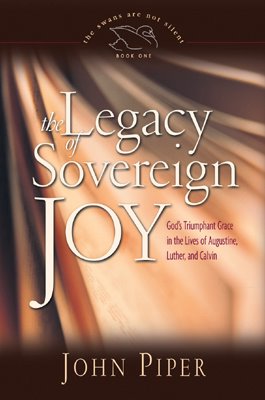
As previously stated, Paul addresses three issues dealing with justification throughout the book of Romans – requirement, remedy, and result. The requirement for justification is set forth in the first three chapters of his epistle as he lays the foundation that “all have sinned and fall short of the glory of God” (Rom 3:23). He begins his argument with a definition of the gospel and his assertion that he [Paul] is “not ashamed of the gospel, for it is the power of God for salvation to everyone who believes, to the Jew first and also to the Greek. For in it the righteousness of God is revealed […and…] the wrath of God is revealed” (Rom 1:16, 17, 18). The gospel, or God’s accurate revelation of Himself to His chosen people, is an act that is purely motivated by God’s grace and not merited by any of the recipients of His special revelation. Paul continues that “since the creation of the world His invisible attributes, His eternal power and divine nature, have been clearly seen, being understood through what has been made, so that [all people everywhere at all times] are without excuse” (Rom 1:20). Because of the sinful nature of humanity, apart from being acted upon by God’s grace, man will always choose that which is sinful, that which is contrary to the character and nature of God, as he is in essence bound to do so. Although God has set in the hearts of men to know right from wrong, men throughout the centuries subsequent to the Fall of man have “exchanged the truth of God for a lie, and worshipped and served the creature rather than the Creator” (Rom 1:25). Therefore, as all men are guilty of sin which leads to death, they are in need of an acquittal, or a declaration, if their hope is to live in eternal paradise of the heavenly kingdom of God. And this declaration will not come from within themselves, for what man can appeal to his own authority or initiative when his own initiative will lead him astray every time? As Augustine wrote in his Confessions in the early fifth century, “O Holy God…when Your commands are obeyed it is from You that we receive power to obey them.” Augustine was merely confirming what Paul had written four hundred years prior – man is completely responsible for his sin and is unable to save himself from the wrath that is due him or to declare himself righteous or not guilty, in the eyes of God. But the wrath of God demands justice, it is required.

Therefore, if God’s wrath demands justice as a requirement for the punishment of sin, where is this remedy for justification to come from? Where might man find the ability to declare himself righteous in the eyes of God? Might it come from a perfect obedience to a set of standards or laws? Never, for Paul declares that “by the works of the Law no flesh will be justified in is sight; for through the Law comes the knowledge of sin” (Rom 3:20). So where might one find the remedy? The only answer is as a result of the sacrificial death of Jesus Christ “for all those who believe… [who are being] justified as a gift by His grace through the redemption which is in Christ Jesus” (Rom 3:22, 24). Purely as an act of God’s grace He chose to declare “not guilty” those who would believe on Jesus Christ as Lord. Paul later states that the ungodly man is justified as a result of his faith and not by his works, and therefore, the sinner’s “faith is credited as righteousness” (Rom 4:5). It is imperative to note that the sinner did nothing to earn the righteousness that was given to him. Rather it was “credited” to him. It was a gracious gift of the Redeemer who freely chose to act out of His own goodness, not out of any merit that the sinful man may have displayed internally or externally. In fact, to be justified, or to receive justification, does not change the inward being of the sinner at all. As Grudem clarifies,

      “Here Paul cannot mean that God “makes the ungodly to be righteous” (by changing them internally and making them morally perfect), for then they would have merit or works of their own to depend on. Rather he means that God declares the ungodly to be righteous in His sight, not on the basis of their good works, but in response to their faith” (723).

The inner being is left unchanged, as through justification, it is only God making it possible for Him to see the righteousness of Christ - the only One who is truly righteous – covering the life of the sinner. “When a judge justifies an accused person he does not make that person an upright person. He simply declares that in his judgment the person is not guilty of the accusation but is upright in terms of the law relevant to the case” (Murray 119). The requirement for justification was set forth in that the justice of God and the wrath of God must be satisfied, and we see through Holy Writ that the only One capable of satisfying such wrath and justice was the person Jesus Christ. “Through one act of righteousness there resulted justification of life to all men. For as through one man’s disobedience the many were made sinners, even so through the obedience of the One the many will be made righteous” (Rom 5:18-19). The obedience of Christ to die on the cross for sinful humanity is the act of righteousness that was able to then allow for the declaration of those whom He foreknew to be considered righteous, and therefore justified. Jesus Christ is the only remedy for redemption.

Therefore, as the requirement of justification is evident in that the wrath of God must be satisfied and the justice of God administered, the remedy for justification is found only through the atoning death of Jesus Christ who “knew no sin to be sin on our behalf, so that we might become the righteousness of God in Him” (2 Cor 5:21), what then is the result of our justification? What is the effect on the ungodly who has now been declared to be righteous? This result is of utmost importance if we are to truly understand God’s redemption of His people. As Arthur Pink comments, “while the soul is ignorant of the doctrine of Justification, there can be no real and intelligent assurance of its acceptance in the Beloved” (138). The initial act of justification allows holy God to look upon unholy man and see the righteousness that Christ has provided. However, as stated above, the inner man has yet to be effected and in essence man is seen as being merely neutral before God. Within God’s economy, sinful man is at this point capable of receiving God’s forgiveness for sin. It is at this point then that God is able to impute righteousness to us, which is that “God thinks of Christ’s righteousness as belonging to us, or regards it as belonging to us. He ‘reckons’ it to our account” (Grudem 726).

It is at this point that the Roman Catholic Church found a large disagreement with those responsible for the Protestant Reformation as the Roman Catholic position is that justification results in the inner change of man which will produce faith and good works as a means to salvation (727-728). This view, however, diminishes the emphasis on God’s gracious choosing to act on the life of the sinner. For if salvation is reduced to being merely by works, then the work of Christ is seen as secondary and not foremost. The traditional Roman Catholic position since the Council of Trent in 1546 has been that there is an “infusion” of righteousness as opposed to an “imputation” and the difference has severe ramifications on a gospel that is to be by grace alone.

      “And the seriousness of the Romish error is not so much that it has confused justification and renewal but that it has confused these two distinct acts of God’s grace and eliminated from the message of the gospel the great truth of free and full justification by grace. That is why [Martin] Luther endured such travail of soul as long as he was governed by Romish distortion, and the reason why he came to enjoy such exultant joy and confident assurance was that he had been emancipated from the chains by which Rome had bound him; he found the great truth that justification is something entirely different from what Rome had taught” (Murray 119).

This debate raged on, but as a result of those who were called by God to be faithful to Holy Scripture, the gospel of grace was recovered, not that it was lost, but it was being ignored. The Apostle Paul’s words then rang true that “therefore there is now no condemnation for those who are in Christ Jesus” (Rom 8:1). For he continues, “for those whom He foreknew, He also predestined to become conformed to the image of His Son, so that He would be the firstborn among many brethren; and those whom He called, He also justified; and these whom He justified, He also glorified” (Rom 8:29-30). So what is the grand result of being justified as a result of God acting on an individual not by the merits of any of his own actions, but solely on the merits of God’s gracious choice? It is that there is no condemnation, nor may there ever be! For those who are in Christ, God sees them as the righteousness that Christ alone holds. Thus, for God to condemn those whom He has justified would be a defiance to His character, for He cannot change, He cannot tell a lie, and He may not disown Himself (Heb 13:8; 6:17-18; 2 Tim 2:13). And if God will not condemn those whom He has chosen to declare not guilty as an act of His gracious justification, who then can call an accusation to God’s elect? No one may do so and have such an accusation be efficacious in the bringing about of condemnation. Not even the father of lies himself can bring forth such an accusation against God’s children. And this result is eternal.

God’s act of justification in the life of the sinner is central to the salvation of man and its proper understanding will evoke a grateful response of praise in the individual. Acknowledging that man is completely dead in his trespasses and may only be brought to life through the life-giving breath of the Savior causes one to see more clearly that man’s works, however mighty they may be, are merely chaff to be blown away in the wind in comparison to the greatest work that has been performed by Christ and imputed to ungodly men. The requirements for justification were set forth when God declared His justice in the Garden of Eden, refusing to ignore sin but dealing with it at its inception. From that point on, the remedy for justification has been through a blood sacrifice. In the Garden, God graciously provided such a sacrifice and on Golgotha, He mirrored this action again. God graciously provided the spotless lamb of Christ to die on behalf of sinful men. And as a result, sinful men could then be declared righteous in His sight and be afforded the opportunity to spend an eternity with Him, rather than continue to be at enmity with Him. From beginning to end in God’s act of redemption, God’s unmeritorious acts of grace perform the requirements that man could not perform, provides the remedy that man could not provide, and produces the results that man in himself could not produce. “To the only wise God, through Jesus Christ, be the glory forever. Amen” (Rom 16:27).


Works Cited

Augustine, Aurelius of Hippo. Confessions. Trans. By R.S. Pine-Coffin, New York: Penguin Books, 1961. 181 (ix, i) as quoted in Legacy of Sovereign Joy: God’s Triumphant Grace in the Lives of Augustine, Luther and Calvin by John Piper. Wheaton, IL: Crossway Books, 2000. 56.

Grudem, Wayne. Systematic Theology: An Introduction to Biblical Doctrine. Grand Rapids, MI: Zondervan Publishing House, 1994.

Holy Bible: New American Standard Bible-Updated Edition. Grand Rapids, MI: Word Publishing, 1995.

Murray, John. Redemption: Accomplished and Applied. Grand Rapids, MI: Eerdmans Publishing Company, 1955.

Pink, Arthur W. The Sovereignty of God. Carlisle, PA: The Banner of Truth Trust, 1928, rptd 1998.

Vine, W.E. Vine’s Complete Expository Dictionary of Old and New Testament Words. Nashville, TN: Thomas Nelson Publishers, 1996.


Read Complete Article...

Monday, May 15, 2006

prayer

Sometimes things are best said by someone who has walked on before…


Take This Life

Written by Shawn McDonald and Chris Stevens

As I'm standing here, staring into the mirror
See the figure of a man trying to take a stand
And live for something more
Integrity is what I need and honor to my soul I feed
Give it up, pack it in, getting rid of all my sin weighing me down


Won't You come and fill
I want You to come and make me more real


Take this life, won't You change this life
Come and make me whole
Won't You take this life, won't You change this life
Won't You come and make me whole


In my pursuit of what is real
My heart is longing with a need to feel my soul come alive
I trudge and I step through the height and the death
Of a long narrow road as I'm growing old
And soon I will be home

Won't You come and fill
Won’t You come make me more real


Take this life, won't You change this life
Come and make me whole
Won't You take this life, won't You change this life
Won't You come and make me whole

Read Complete Article...

Friday, February 24, 2006

Doctrinal Statement for Humanity, Sin, and Salvation

The Assignment: "Utilizing no outside resources other than your own convictions backed by the Biblical text, formulate a Doctrinal Statement for the Doctrines of Humanity, Sin, and Salvation. Each statement must be supported by one or more Biblical reference. Do not consult any other Doctrinal Statement, confession, or theological resource (e.g. books, pamphlets, articles, sermons, etc). The Bible is to be your only resource."

This assignment was given as part of a Theology course (THEO 2231) at Southeastern Bible College, Spring 2006. My response was what follows…

Doctrinal Statement of the Doctrines of Humanity, Sin, and Salvation
By KC Armstrong

I. Doctrine of Humanity
In the beginning, when God created the Heavens and the Earth, He also created man (Gen 1:27). God formed man out of the dust of the ground and “breathed into his nostrils the breath of life” (Gen 2:7). Man was not created as an act of natural means or by any accident that transpired over time but was created in the image of God and is the only part of God’s creation that bears His image (Gen 1:27). As a result of being Created directly by God, not by a chance process, and bearing the image of God, man is granted an individual sense of identity and is not to be viewed as a machine (insignificant and easily dispensable), simply an another animal species (for man is higher than all other species), or as a pawn in the universe (as God is intricately involved in the details of man’s life) (Gen 1:27-28; Ex 20:13; Ps 139:3-15; Eph 2:10). God, IN His wisdom, decided that it was “not good for the man to be alone” (Gen 2:18), therefore He made a suitable helper for the man. Woman was formed by God out of the rib of the man and the two were given dominion over the earth, to subdue it, and to rule over it (Gen 1:28). Thus, God’s ordination of and blessing upon the union of marriage was declared good when exercised under the authority of God between one man and one woman committed for life (Gen 2:24). Scripture address the varying parts of the man (heart, soul, mind, body) however one is not to be stressed over the other. As sin affects the entire being and salvation accomplishes redemption of the entire being, it is to be understood that the constitutional nature of man has varying parts but one whole. Therefore, all parts are moving in one direction at all times whether in word, or deed, or thought (Gen 34:8; Lev 26:15; Deut 6:5; 1 Sam 1:15; 1 Kin 8:48; Mat 10:28; Mat 22:37)

II. Doctrine of Sin
As a result of Adam’s sin, a sin nature has been transferred from every descendant from him to include all men and therefore all men after Adam were created with a nature inclined towards sin and as a further result there is no man who is without sin (Gen 8:21; 1 Kin 8:46; Ps 130:3; Pr 20:9; Eccl 7:20; Rom 3:23; Rom 5:12-17). In man’s sinful state, the totality of his being is corrupt and therefore he engages in deeds that are hostile towards God and is considered to be an enemy of God (Rom 5:8; Eph 2:3; Col 1:21). As a result of his being total depraved, man is enslaved to his own sinful desires and unable to free himself from such desires, he will deny responsibility for his own sin, he will deceive himself of the existence of his own sin, he will find himself unable to sense the presence of sin in his life, he will become increasingly concerned about his own needs, and will never be satisfied by the sin that he wants (Gen 3:12; Jer 17:9; Ex 7:3; Zec 7:12; Rom 6:17; Heb 11:25; Jam 1:15 1 Joh 1:8; ).

The result of man’s sin affects his relationships with other humans by causing competition among them, being overly concerned with his own desires and thus unable to see things from the perspective of his fellow man, he will reject authority in his life – especially the authority of God, and sin will produce actions that are only sought for his own satisfaction with no regards for others (Ex 32:31; 1 Sam 15:23, Mat 18:6; Ph 2:3-5; Jam 4:1-2; 17)

The results of sin are also evident in man’s relationship with God. Sin results in divine disfavor, guilt before a holy God as we have transgressed His law, accountable for punishment, and justifiably able to receive the penalty of death; physically, spiritually, and eternally (Gen Deut 4:25; 9:27; Josh 23:16; Ps 78:59; Rom 3:23; 6:23; Eph 2:1, 5; Col 2:13; 2 Pet 2:14; 1 Joh 5:16).

III. Doctrine of Salvation
As a result of man’s sinful nature and his inability to free himself from the bondage of sin, and God in His justice must punish sin, man is in need of salvation. (Rom 3:23). Before the foundations of the world were established, God chose some to be conformed to the likeness of Christ and to those alone He has rendered it certain that they will experience His salvation (Ps 139:3, 13-15; Rom 8:28-30; Eph 1:4; Col 3:12; 1 Pet 1:1-2). Salvation from beginning to end is an act of God’s grace, that is, man presents no quality that is worthy of redemption and it is only through the grace of God that man may experience salvation, not by man’s works. Not all men will be saved, and it will be only those whom He has chosen, but no chosen man will deny the effectual calling of God (Joh 6:44; Eph 2:8; 1 Pet 1:3).

Salvation is instantaneous and a process at the same time. In its initial state, the unbelieving, sinful man has his sin revealed to him, causing him to repent of his sin, to acknowledge Christ as Lord, and to place his faith in Christ, not trusting in his own works, but he does not do so as a result of his own mind, but only in response to the grace of God. This is regeneration and, at this time, the man is then adopted, or placed, directly into the family of God and his salvation is eternally secure at this moment as he receives the indwelling of the Holy Spirit as a deposit guaranteeing what is to come (Is 55:1; Ez 11:19-20; Jer 24:7; Dan 9:18; Joh 1:13; 3:3-21; 6:44; Eph 2:4-8; Col 1:22; 2 Tim 1:9-10; Tit 3:5-7; Heb 1:3; 1 Pet 1:2-3, 23; 1 John 3:2). As a result of this regeneration, the man is now a new creation, with a new nature, and is therefore justified, or declared not guilty before the Father because of the work of Christ on the cross (Ps 103:8-12; 118:14; Is 1:18; 53:3-7; 2 Cor 5:17, Tit 3:5). Sanctification is the next step in salvation and is the period of time where the new believer is in a continual relationship with Christ and is being conformed to His image (Rom 6:19-22; 8:28-30; 1 Pet 1:2-3). All true believers, those whom God has chosen, will persevere in their faith until the end times and beyond. None have the capacity to fall away and Christ can not deny Himself by casting them off. Therefore, salvation is eternally secure (Joh 17:6, 9-10, Eph 1:13-14; Col 1:13-14; 1 Th 4:13-17; 2 Tim 2:11-13; Heb 6:4-6; 1 Pet 1:3-5). There will be a time for all those who have been chosen that they will be brought up into Heaven to take up eternal residence with Christ. At this point, they will receive glorified bodies that are no longer tainted with a sinful nature and will have the opportunity to worship Christ fully for all of eternity. (John 6:44; 1 Cor 15; Col 2:12; 1 Th 4:13-17; Rev 11:12)

As man is totally depraved while in his sin nature, that is, unable to remove himself from his position, God as an act of His grace provided the means for His wrath to be satisfied and for his justice to be given (Rom 1:18; 2 Cor 5:21). This means is not through the work of men but by the death of Christ on the cross (Eph 2:8-9). His death was sacrificial in that He was without sin and therefore the only candidate capable of presenting Himself as a spotless lamb in line with the Old Testament system of sacrifices (Ex 29:36; Lev 1:3, 3:1, 2 Cor 5:21; Heb 9:6-15, 10:5-18). In His death, He became the propitiation and substitution for sin in that, He first fulfilled the whole law and then He became sin for man so that the wrath of God could be poured out upon Him and satisfied by such pouring out although He Himself knew no sin (Is 53:5-6, 12; Mat 27:46; Joh 1:29; 2 Cor 5:21; Gal 3:13; 4:3-4; 1 Pet 2:24). In His death, He accomplished the ministry of reconciliation in that He has now provided a link between God the Father and sinful man. Without this reconciliation all men would remain alienated from God unable to approach Him by their own means (Ex 33:20-23; Lev 16:17; Mat 27:51; Rom 3:23-25, 5:11; 2 Cor 5:18-19; Col 1:20; 1 Tim 6:16; Heb 10:14).

For a Better Formulated Doctrinal Statement See "Baptist Faith & Message, 2000" Here

Read Complete Article...

Why I Blog

No one asked, but I thought I would answer. I suppose that there are many noble purposes for which persons offer as to why he or she chooses to blog. I also suppose that there are a myriad of reasons that are somewhat less than noble. Without the ability to confidently and competently ascertain why any individual acts in any fashion, I will pass on the opportunity to speculate on the purposes of the forty gagillion weblogs that are now in existence. However, I will make one comment regarding blogs of the Christian community: “Most Bloggers are not theologians and all (including this one) should be tested against the authority of Scripture – not the yea or nea comments posted by passers by.” Having said this, on to my own purpose for blogging, of which I confess, that I sometimes also question the nobility (or lack thereof) in my own reasons for posting.

As all Christians are called to “do all to the glory of God” (1 Cor 10:31), I ought not to entertain the idea of doing anything that falls short of His glory. However, everything that I do in and of itself will in fact fall short of His glory, so there appears to exist a conundrum. I resolve this riddle by acknowledging that I will never achieve the righteousness that Christ desires for me and thus rely on the righteousness that He sovreignly chose to give me and all those of His Church (Romans 3:23-26). And thus seek, as an earthly representative of His dwelling place (2 Cor 3:16), to act in accordance with His provisions “so that in all things God may be glorified through Jesus Christ, to whom belongs the glory and dominion forever and ever. Amen.” (1 Peter 4:11).

But in this moment I also must confess the depravity of my own soul, knowing that there are times when I desire the glory for myself. I desire to be puffed up with compliments and adoration so that I may appear to all as more sanctified than my fellow brothers and sisters in Christ. The need to appear “spiritual” outweighs the command to be humble “under the mighty hand of God, that He may exalt [me] at the proper time” (1 Peter 5:6). Intellectually I also know that “when pride comes, then comes dishonor; but with the humble is wisdom” (Proverbs 11:2), yet I still struggle with the desire for my own self recognition. “I know that nothing good dwells in me, that is, in my flesh; for the willing is present in me, but the doing of the good is not” (Romans 7:18). And agreeing with Augustine, “…O Holy God…when Your commands are obeyed, it is from You that we receive the power to obey them” (1). Thus, I trust that the eternal weight of His presence, will drown out the impure over time, and when I am gone to glory, my desires will finally be perfected to conform to the desires of His heart.

So, if the preceding is more of a “how” I should blog, let me attempt to answer my own question of “why?” I blog so that I might see my thoughts develop into a God-centered, Christ-exalting conviction. If I can not achieve this, I ought not to publish before I have had the opportunity to bring such thoughts “captive to the obedience of Christ” (2 Cor 10:5). And this is where the blessings enter. None to the reader’s chagrin, a gaggle of thoughts preceded the finished product and through the seeking to understand my own purposes for each article, I see where my convictions lie, and words unfold. Often wrinkled, but unfold nonetheless. This is primarily a fancy method to describe the reality that I need practice organizing my thoughts in a concise and articulate expression. This is a gift that many have and I wish to develop. And therefore, by challenging my own convictions, the blog provides a means in which to force practice; for every article does not meet a posting without study and research. My aim is not to be the overachiever who can post twenty-eight pages a day telling tale of the comings and goings of everything in the western hemisphere - and there are many who are capable of such a feat. I can rattle off three or four pages of typesetting without communicating a single thought, but this just signifies that I am long-winded. For an aspiring public communicator, this is a curse. Attention spans are dwindling as the centuries troll along, and it has now become increasingly more vital to be pointed in speech so that the message of the preacher is not lost in the fluff.

Case in point. This last paragraph could have been summed up this way: “I need the practice.” But instead, I fluff – even through several revisions. Rants.

May His glory be evident despite these twisted fingers.

(1) Aurelius Augustine of Hippo. Confessions. trans R.S. Pine-Coffin. New York: Penguin Books, 1961. 181 (ix, i) as quoted by John Piper Legacy of Sovereign Joy: God's Triumphant Grace in the Lives of Augustine, Luther, and Calvin. Wheaton, IL: Crossway Books, 2000. 56.

Read Complete Article...

Thursday, February 09, 2006

Mock Jury

I have struggled over the last few days to find the balance between compassion/respect and being completely appalled and then incensed. Unless you have been under a rock for the past few weeks, you have heard tale told of the uproar over the posting of disrespectful cartoons depicting the Islamic Prophet Muhammad wearing a bomb in his turban. The Islamic tradition does not tolerate for any image of the prophet to be cast, respectful or disrespectful. Therefore, since these images fell along the disrespectful side, the backlash has been even greater.

I do have a level of compassion for those who truly have been offended and have chosen to express their dissatisfaction legally through the boycott of Danish products or what have you. However, I am appalled at those who have chosen to respond with violence to the extent of burning a Danish embassy and other acts that have resulted in the deaths of several individuals. And to these individuals I would like to pose the question: “Muhamad was shown with a bomb in his turban, indicating that those who follow him enjoy violence. And you are responding with an even greater violence, therefore, what message am I to take from this concerning the Islamic faith?” It simply does not make sense. My own shock and amazement increased exponentially today by an interview conducted by NPR’s Morning Edition with Ahmed Abu Laban, the religious director of the Muslim Society in Copenhagen, Denmark. Abu Laban is the man responsible for informing the world of the existence of the cartoons by sending what he calls “intimidation letters” to various centers in Egypt and Lebanon. In these “intimidation letters,” he chose to not only reprint the cartoons that he is supposedly adamantly opposed to being in print, but he also willingly reprinted other cartoons that were NEVER published. So I question what his true motivation was. Was it truly so that the Danish newspaper would apologize to the Islamic faith, or was it a way to incite those who are prone to violence so that they may have an excuse to do so? Kudos to NPR, Morning Edition, and Steve Inskeep for this interview.click here for interview

John Piper, in his article Being Mocked: The Essence of Christ’s Work, not Muhammad’s, makes a quite insightful observation: “The work of Muhammad is based on being honored and the work of Christ is based on being insulted.” Part of Christ’s incarnation was His humiliation. The very fact that He descended from the loftiest of all thrones, gave up the position above all other positions and chose to become flesh was a humbling experience for Him. As Ken Gire has written, “The baby [Jesus…]sighs, the divine Word reduced to a few unintelligible sounds. Then, for the first time, His eyes fix on His mother’s. Deity straining to focus. The Light of the World, squinting[…]She touches His hand. And hands that once sculpted mountain ranges cling to her finger.” All this before He faced angry crowds, had His character challenged, was kicked out of towns, denied by His closest friend, scorned, ridiculed, and mocked profusely by a group of soldiers who were just having a little Friday night fun. His humiliation was required for our salvation and future glorification.

Perhaps men and women of the Islamic tradition understand Christianity’s 2nd commandment more than we do: “You shall not make for yourself an idol, or any likeness of what is in heaven above or on the earth beneath or in the water under the earth” (Ex 20:4 NASB). Why would God give us such a commandment? Because He knew in our own limitations that we could not possibly make an image that accurately resembled His likeness and His character. So was the cartoon of Muhammed an accurate representation of his character or completely off the mark? If the reaction that it has sparked is any indication, I would venture to guess that it was dead on. Furthermore, it has much more of a possibility of being accurate because Muhammad was a man, not the Divine Savior, Creator, and Author of all things, through whom all things hold together. “Jesus Christ is still the only hope of peace with God and peace with man. And it means that his followers must be willing to “share his sufferings, becoming like him in his death” (Philippians 3:10)” (Piper).

For the complete article by John Piper,click here

Ken Gire. Moments With the Savior: A Devotional Life of Christ. Grand Rapids, MI: Zondervan Publishing House, 1998. 31.

** UPDATED 2/13/06 **: Little did I know, Dr. Russ Moore, Dean of the School of Theology at the Southern Baptist Theological Seminary, was sitting in as guest host for the Albert Mohler radio program the same day that I posted this commentary. As Drs. Moore and Mohler are much more learned than I am, I would submit the radio program to you for your review. You may access it here

Read Complete Article...

Tuesday, February 07, 2006

Be Diligent to Show Yourself Approved

Written to me by my beloved brother, Rev. Francois Verschelden, Pastor Living Rock Baptist Church, St-Felix de Valois, Quebec, Canada on October 21, 2002 [I have not edited so that you might receive his “tiny” little French accent]:

“To ‘Happy Memories’ add the study of the Word of God. Combine two together and you will always be able to know that you are still in God’s plan for your life and make a difference in the life of other.

2 Ti 2:15
Love you. Your Friend forever”

Francois wrote this to me during our first trip and subsequent first good-bye (of two that trip) to Montreal and the surrounding areas. At the time, I was a little miffed by what he wrote. Honestly, I was shocked that he would write to me – me of all people! – and tell me that I need to study more and that I should “be diligent to present [myself] approved to God as a workman who does not need to be ashamed, accurately handling the word of truth.” Although I did not know this at the time, Francois hit me dead on, but his message fell on a hard heart. I thought that I was studying and reading “enough.” I had my quiet times, my accountability group, my Bible study group, my various ministries that I was a part of, etc, etc. But Franco (as I affectionately call him) knew that I needed to be encouraged to study more and to not be satisfied with minute niblets of the truth. He exhorted me to feast upon the Bread of Life and to get fat from it.

I recalled this admonition from my past as it has thankfully haunted me ever since. I come to realize that as one who likes to study and will make a lifetime of doing so; I have the opportunity of becoming calloused to any passage of Scripture because I have “read that one before.” Dr. Howard Hendricks reminds us,

“The genius of the Word of God is that it has staying power; it can stand up to repeated exposure. In fact, that’s why it is unlike any other book. You may be an expert in a given field. If you read a book in that field two or three times, you’ve got it. You can put it on the shelf and move on to something else. But that’s never true of the Bible. Read it over and over again, and you’ll still see thing that you’ve never seen before” (1).

It is quite simple to get caught up in thinking that a particular passage has already been mastered, or at least thoroughly examined. The only thing true about that statement is that it has been mastered, but only by the author – never the reader. I would probably even venture to say that the human authors who were “moved by the Holy Spirit [who] spoke from God” (2 Peter 1:21) did not completely comprehend the message that the Lord was giving each of them to proclaim but only the source of the message – The Trinity – could understand. Peter spoke of Paul’s writings in such a way to indicate that he may have wrestled with them as well: “Our beloved brother Paul, according to the wisdom given him, wrote to you, as also in all his letters, speaking in them of these things, in which are some things hard to understand” (2 Peter 3 15-16). I am thankful for this statement of truth to affirm that in the times when I do not fully understand Scripture’s intent, that I am not a blundering idiot immediately cast out of the Presence of the Lord.

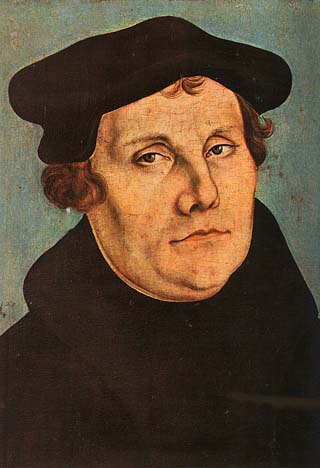
All this as an introduction to say, if there ever was one who was diligent to show himself approved, his name was Martin Luther, the Augustinian Monk from Erfurt, Germany (2). In regards to Luther’s diligence to pursue the truth behind Romans 1:17 (“For in it the righteousness of God is revealed from faith to faith; as it is written, ‘BUT THE RIGHTEOUS MAN SHALL LIVE BY FAITH.’”) which brought about the face of the Reformation and much of the Protestant Church as we know it today, he says, “I beat importunately upon Paul at that place, most ardently desiring to know what St. Paul wanted” (3). His passion for the truth and his utmost desire to truly divide the Word down to its marrow and to drink deeply from the riches of its well was his driving force, and thankfully, he was not content to allow his studies to be consumed with the commentaries of his contemporaries.

“It is a sin and shame not to know our own book or to understand the speech and words of our God; it is still a greater sin and loss that we do not study languages, especially in these days when God is offering and giving us men and books and every facility and inducement to this study, and desires his Bible to be an open book. O how happy the dear fathers would have been if they had our opportunity to study the languages and come thus prepared to the Holy Scriptures! What great toil and effort it cost them to gather up a few crumbs, while we with half the labor – yes, almost without any labor at all – can acquire the whole loaf! O how their effort puts our indolence to shame!” (4)

As Luther penned these words in the 1500’s, John Piper adds “With computer programs for instruction and use of the languages, how much more true is this today than when it was written!” (5)

Luther’s charge to any student of the word, and probably more ardently toward the teacher:

“The call is: watch, study, attend to reading. In truth you cannot read too much in Scripture; and what you read you cannot read too carefully, and what you read carefully you cannot understand too well, and what you understand well you cannot teach too well, and what you teach well you cannot live too well” (6).

And concerning his understanding of the laborious work of the student of the Word:

“Ask…a preacher…how much work it is to speak and preach…The pen is very light, that is true…[In other types of work] the person can sing happily or make jokes freely which a sermon writer cannot do. Three fingers do it all…but the whole body and soul have to work at it” (7).

A true teacher, who understands the power, the weight, and his accountability before the Father, will do his due diligence to make sure that he accurately handles the word of truth. For one who is fully submitted to the Biblical text and has submerged himself into it, the proclamation of this timeless truth demands the totality of his being; his mind, his heart, his tongue, his hands, his eyes, his ears, and the rest of his members. The true teacher does not achieve this thirty minutes before he is to preach or even one hour prior. As A.W. Tozer comments, “It is a solemn thing, and no small scandal in the kingdom, to see God’s children starving while actually seated at the Father’s table” (8). The true teacher understands this and is haunted by this very reality and therefore, makes it his aim to faithfully study so that he might declare the excellencies of his Maker.

Dr. Albert Mohler, one who believes fully in the centrality of preaching as worship says

“The church has never been faithful when it has lacked fidelity in the pulpit…Those who are called to preach bear a heavy duty. As Martin Luther confessed “If I could come down with a good conscience, I would rather be stretched out on a wheel and carry stones than preach one sermon"…True preaching is not an exhibition of the brilliance or intellect of the preacher, but an exposition of the wisdom and power of God…This occasion itself represents the divine initiative, for it is God Himself, and not the preacher, who controls His Word” (9).

If you teach, study to show yourself approved. If you are a hearer, pray for your pastor, your teacher, your Bible study leader, whoever is responsible to faithfully declare what God has already revealed. As with the Gospel, the duty comes with great reward but at great sacrifice.


1 Howard Hendricks. Living By The Book. Chicago, IL: Moody Press, 1991. 81.
2 John Piper. The Legacy of Sovereign Joy: God’s Trumphant Grace in the Lives of Augustine, Luther, and Calvin. Wheaton, IL: Crossway Books, 2000. 84.
3 John Dillenberger, ed. Martin Luther: Selections from His Writings. Garden City, NY: Doubleday and Co., 1961. xvii. As quoted by John Piper. The Legacy of Sovereign Joy: God’s Trumphant Grace in the Lives of Augustine, Luther, and Calvin. Wheaton, IL: Crossway Books, 2000. 91.
4 Fred W. Meuser. Luther the Preacher. Minneapolis, MN: Augsburg Publishing House, 1983. 39. As quoted by John Piper ibid. 99-100.
5 ibid. 100.
6 Meuser ibid 40-41. Piper ibid 101.
7 ibid 44-45. ibid 101-102
8 A.W. Tozer. The Pursuit of God. reprinted, Camp Hill, PA: Christian Publications, INC, 1993. 8. (originally written in 1948)
9 Albert Mohler. “Why Do We Preach? A Foundation for Christian Preachin, Part One” click here for article


** UPDATED 2/13/06 **:
Another much more learned scholar than I, J. Ligon Duncan, has commented on the need for maturing Christians to study. He quotes C.H. Spurgeon who is commenting on 2 Tim 4:13, "[Paul] is inspired, and yet he wants books! He has been preaching at least for thirty years, and yet he wants books! He had seen the Lord, and yet he wants books!...The man who never reads will never be read; he who never quotes will never be quoted. He who will not use the thoughts of other men’s brains, proves that he has no brains of his own. Brethren, what is true of ministers is true of all our people. YOU need to read. Renounce as much as you will all light literature, but study as much as possible sound theological works, especially the Puritanic writers, and expositions of the Bible. We are quite persuaded that the best way for you to be spending your leisure, is to be either reading or praying." Read Duncan's article, posted on the Together For the Gospel Blog here.

Read Complete Article...

Monday, February 06, 2006

The Corruptible Image

“You shall not make for yourself an idol, or any likeness of what is in heaven above or on the earth beneath or in the water under the earth.” Exodus 20:4 NASB

In the deliverance of the Sinai Covenant, where God promised His blessings to Israel conditional upon their obedience to His commands, He includes the command to abstain from setting up an image as a replica of the things in the heavens. Somewhat ironically, as this command was being given, the people of Israel were at the bottom of the mountain wondering what had happened to their leader, Moses, and in need of the assurance that comes from physical sight. Therefore, Aaron created a golden calf for them and said plainly “Tomorrow shall be a feast to the LORD” (Ex 32:5). Aaron was not attempting to undermine the authority of God or to lead the people of Israel into false worship, but he thought he was establishing an image that they could cast their comforts on. However, the image, as pretty as it may have been, was wrong.

And thus is the crux of the second commandment. Do not attempt to formulate a picture of who God is inconsistent with His character that He has revealed in Scripture, because it will be wrong. I make an image of who I want God to be every day. I want Him to be lenient, to overlook my sin, and to allow me to continue along a path of unrighteousness because it is much more convenient for me and I somehow think that I am above His commandments. I want Him to act in accordance with my timeframe and in the way in which I think is best for all creation because in my limited focus, that is all I know. But the image that I want and the image that I need are oftentimes at the opposite ends of the spectrum. I want Him to overlook sin, but I need for Him to hate sin so much that He provides atonement for it. I want Him to act in the way that I see fit, but I need Him to act in the best interest of His Church and the rest of His creation for only then will I truly see His glory and His fame.

I want to want to see Him as my ultimate need. Augustine understood this great delight in the Father. He said, “I call ‘charity’ [i.e., love for God] the motion of the soul toward the enjoyment of God for His own sake, and the enjoyment of one’s self and of one’s neighbor for the sake of God”(1). Basically, that nothing less than a true, pure image (or concept) of who God is should be able to satisfy the truest longing of my soul. Or as John Piper declares, “Grace is God’s giving us sovereign joy in God that triumphs over joy in sin”(2). That my desire for Him would far exceed any conceptual desire that I have for the things of this world, things that are in rebellion to His character, things that are not for my spiritual benefit or betterment but only possess the present-day, momentary, fleeting, and empty value that they offer. Presented with the choice of Sovereign Joy in knowing Christ and Him crucified and the offer of a tiny taste of what I know will not satisfy, apart from grace, I will always choose the morsel of disobedience.

Lord, may I truly have a right understanding of who You are and Your redemption plan that You have enacted for Your people. May I rightly see You as You have revealed Yourself in recorded truth and that I may consistently seek Your grace to allow me to choose You over all things. To choose You over me. I confess that I choose me all too many times, and I exchange the glory of God for the corruptible image of man. Help me to understand that I am in Your image, and I am in Your name, and there is more to life than the here-and-now, and there is more to life than me. Move me past myself so that I may see You fully and accurately. Open my eyes that I may behold wonderful things from Your law.” (Psalm 119:18).

1 Aurelius Augustine of Hippo. On Christian Doctrine, translated by D.W. Robertson, Jr. Upper Saddle River, NJ: Prentice Hall, 1958. 88. Quoted by John Piper, The Legacy of Sovereign Joy: God’s Triumphant Grace in the Lives of Augustine, Luther, and Calvin. Wheaton, IL: Crossway Books, 2000. 56

2 John Piper. The Legacy of Sovereign Joy: God’s Triumphant Grace in the Lives of Augustine, Luther, and Calvin. Wheaton, IL: Crossway Books, 2000. 57

Read Complete Article...

Wednesday, February 01, 2006

Ketchup

Baby Tomato was lagging behind Mama Tomato one day as they were out for a stroll. After chiding him profusely for his slow progression, Mama Tomato went back to Baby Tomato and squashed him. She then said “Ketchup.”

And thus my Heinz 57 Variety of things comes today as a result of a diminished capacity or ability to retain an attention span long enough to satisfy a gnat.

Jan 4 – I had the privilege of being in one of he sweetest times of worship and prayer as I was presented to our church family to be set apart and ordained as a Deacon for our local body. We had a time to “lay hands” and as each hand descended upon me I felt many things one of which was the literal weight of men pressing down on me. More spiritually, however, was the weight of the responsibility that the Lord was leading me into. I really have a grand opportunity to screw up royally and my dependence upon the grace of our Lord must increase day by day. In contrast, I also felt the lifting up of men who have gone before me, some who know me intimately and some who do not, all who by their own willful admission are not perfect, but are “perfected for all time” (Heb 10:14 ESV) by the sovereign choice of our Lord. To be encouraged and admonished in such a way was an unforgettable experience of grace. I will treasure it always.

Jan 10 – School began again for the next semester and my first class has just come to a close as I record these lines; new format, different style of work loads, and thus far, much more enjoyable. Much writing has been accomplished in the areas of the Doctrines of Humanity, Sin, and Salvation. I plan to post my doctrinal statement for these in a few days. Pentateuch begins next week (Feb 7) and will continue for the following four weeks. I am excited about this next opportunity as I must confess that my knowledge of the first five books is lacking.

Jan 29 – My first official sermon delivered to a crowd of single adults during a Sunday evening worship service. I have taught Sunday school lessons, spoken in prisons, homeless shelters, and given testimony, devotional, or brief “sermonettes” (typically a soap box) on varying occasions, but this was the first officially sanctioned, wireless microphone, recorded, “guest speaker” kind of engagement. There are always the encouragers of the crowd who say “You did a great job” or “I really enjoyed” to which my response is always “Well, what are you gong to do about it?” The subjective measure of “success” will never come in this lifetime and my hope is that I will never become consumed with this desire for the praises of men. I believe that I can honestly attest that I was in submission to the Biblical text (Col 3:12-17, titled The Lion, The Diciple, and His Wardrobe), that I was “diligent to show [myself] approved to God as a workman who does not need to be ashamed, accurately handling the word of truth” (2 Tim 2:15 NASB), and that the supremacy and preeminence of Christ was manifested above all things. And for these, I trust that the Lord was glorified. I haven’t been fired yet, so I trust I did not say anything heretical. For my own amusement, the notes to this sermon may find themselves posted as well at a later date.

Splat.

Soli Deo Gloria

Read Complete Article...

Saturday, December 31, 2005

Encouraging Words

As part of our weekend ritual, my wife and I sip coffee Saturday mornings at a favorite establishment of ours while reading, pondering, and discussing. Today was no exception (although she did bring her own tea bag and asked for hot water) and I received great encouragement from the work that I have promised will be completed before January 10, 2006. Mentioned before in the "What's In The Backpack?" article , The Autobiography of George Muller has really challenged my faith in prayer. Truly, I have the opportunity to communicate with the Creator of the universe and I am told to come boldly before His throne with confidence (Hebrews 4:16), yet how often do I come with great confidence? Muller knew what confidence was. He knew Who his confidence was in.

In response to some of the Lord's workers who discouraged that many more of the children under their care were not coming to the Lord and they were about to give up: "On the contrary, we should give the Lord no rest until we see fruit. Therefore, in persevering yet submissive prayer, we should make our requests known to God. I am now looking for many more children to be converted." (132-133)

On getting his priorities right: "May 7 [1841]. The primary business I must attend to every day is to fellowship with the Lord. The first concern is not how much I might serve the Lord, but how my inner man might be nourished. I may share the truth with the unconverted; I may try to encourage believers; I may relieve the distressed; or I may, in other ways, seek to behave as a child of God; yet, not being happy in the Lord and not being nourished and strengthened in my inner man day by day, may result in this work being done in a wrong spirit." (138-139)

In regards to his poverty: "Truly, it is worth being poor and greatly tried in faith for the sake of having such precious, daily proof of the loving interest which our kind Father takes in everything that concerns us [...] If the hearts of the children of God are comforted and their faith strengthened, it is worth being poor and greatly tried in faith. Those who do not know God may read or hear of His dealings with us and see that faith in God is more than mere notion. There is indeed reality in Christianity." (151)


There is, indeed, reality in Christianity. It is not something that is resigned to the false notion of the fact/value dichotomy that many wish to ascribe to matters of faith. Christ is real and thus Christianity is real. Well said, Mr. Muller.

(The above quotations were taken from The Autobiography of George Muller by George Muller. New Kinsington, PA: Whitaker House, 1984. )

Read Complete Article...