Tuesday, January 09, 2007

My Life or Yours?

Found today on Library Things’ Unsuggester Page…


Did you like?


Then you will not like:


Should this really surprise me? Ahh, the humors of the techno-evangelical world and the rest of us who are easily amused.


LibraryThing's (un)suggestions are © 2005-2006 LibraryThing.com, LLC. Obviously all manner of discussion and excerpting is permitted and encouraged. Copying them wholesale and in bulk is not.

Read Complete Article...

Saturday, January 06, 2007

More Joy

“You have put more joy in my heart than they have when their grain and wine abound.”
(Psalm 4:7 ESV)

Wow. What a statement! Kimberly and I read this last night while we were stretching and this verse jumped out at me. However, it is quite discouraging that even though I know this truth, I still long for the lifestyles of them whose “grain and wine abound.” I desire the lifestyle of those who are comfortable - those who have money and land and houses and the other accoutrements of this world. Yet it is still difficult for me to think about who I was even when I was seeking after these things. For, there was a time when I sought after the party lifestyle – promiscuity, strong drink, and whatever else made me feel good at the time. I thank the Lord that He chose to reveal to me that the way of this life ends in death and that there is a better way: the Way of the Master. Yet even acknowledging this truth, I also acknowledge that I am still tempted to leave this life of mine in hopes of something “easier,” less stringent, and more “freedom.” Yet I also know that this so-called “freedom” is really bondage to sin.
“When you were slaves of sin, you were free in regards to righteousness.
But what fruit were you getting at that time from the things of which you are
now ashamed? The end of those things is death. But now that you have
been set free from sin and have become slaves of God, the fruit you get leads to
sanctification, and its end, eternal life. For the wages of sin is death,
but the free gift of God is eternal life in Christ Jesus our Lord.” (Romans
6:20-23)
But the truth is that God, through His gift of Christ Jesus and the deposit of the Holy Spirit guaranteeing things to come, has “put more joy in my heart” than any thing, any person, any relationship, any toy, any house, any car, or any thing else in all creation has ever been able, or will be able to give me. He has given me the epitome of joy – Christ Jesus Himself in who’s “presence there is fullness of joy” (Ps 16:11). He is the image of the invisible God (Col 1:15), the radiance of His glory (Heb 1:3), and the One who has shone His light “in our hearts to give the lights of the knowledge of the glory of God in the face of Jesus Christ” (2 Cor 4:6). He has given me the greatest Joy the world has never known. The greatest Joy above all other joys. Just as He is King of kings and Lord of lords, He is also the Joy of joys. May I now “go to the altar of God, to God my exceeding joy” (Psalm 43:3).

Lord Jesus, please make this a true desire of my heart and may I truly see You as Joy eternal and Joy inexhaustible. May You alone satisfy this longing for Joy. In Your name I come to the altar of my God, my exceeding joy. Amen.

Read Complete Article...

Tuesday, January 02, 2007

Book Review - God Is the Gospel by John Piper

God Is the Gospel: Meditations on God’s Love as the Gift of Himself
By John Piper
Crossway Books, 2005
Category: Theology / Christian Living
ISBN: 1581347510
Hardcover with Dust Jacket
179 pages plus Subject Index and Scriptural Index
$17.99 MSRP


If there has ever been a book that has one central theme and every chapter, section, page, paragraph, sentence, and word attempts to hammer that theme one inch further – God Is the Gospel is the one. This is – in a complimentary way – redundancy at its finest. Piper’s theme here is this:


“The acid test of biblical God-centeredness – and faithfulness to the gospel –
is this: Do you feel more loved because God makes much of you, or because, at
the cost of His Son, He enables you to enjoy making much of Him forever? […] If
the enjoyment of God Himself is not the final and best gift of love, then God is
not the greatest treasure, His self-giving is not the highest mercy, the gospel
is not the good news that sinners may enjoy their Maker, Christ did not suffer
to bring us to God, and our souls must look beyond Him for satisfaction […] When
I say that God Is the Gospel I mean that the highest, best, final, decisive good
of the gospel, without which no other gifts would be good, is the glory of God
in the face of Christ revealed for our everlasting enjoyment” (11, 12, 13).

And thus follows the theme of this book. Every paragraph is dripping with the intensity of understanding that God Himself is the greatest good. God Himself is what we get when He chooses to grant us salvation. Salvation was never intended to be reduced merely to a “Get Out of Hell Free” card. Rather, God grants us that which is the highest, greatest, and best treasure that the world has ever or will ever know – Jesus Christ Himself. Yes, we get spiritual gifts. Yes, we receive new life, but the greatest treasure of the gospel, that which truly makes it “good news,” is the “surpassing worth of knowing Christ Jesus [our] Lord” (Phil 3:8). He is the all-sufficient, all-satisfying, all-encompassing reality of everything that we could ever want or need. I must confess that although I know this theological truth, I often do not live this way. But, Lord willing, I am moving toward a greater understanding of the practical implications that this has for my life and God’s glory.

The chief text from which Piper draws his conclusion comes from the Apostle Paul’s second letter to the church in Corinth:


“In their case the god of this world has blinded the minds of the unbelievers,
to keep them from seeing the light of the gospel of the glory of Christ, who is
the image of God. For what we proclaim is not ourselves, but Jesus Christ as
Lord, with ourselves as your servants for Jesus' sake. For God, who said, "Let
light shine out of darkness," has shone in our hearts to give the light of the
knowledge of the glory of God in the face of Jesus Christ.” (2 Corinthians 4:4-6
ESV)

During one of our group discussions, our executive pastor made the comment that he had never thought of his own salvation in context of creation when God said “Let there be light” (Gen 1:3). And neither had I. But Paul makes it clear in this passage that there is a parallel to be drawn between the creation of the heavens and earth and the creation, of a new creature in Christ. One nanosecond before I became a Christian, I was spiritually dead in my trespasses and sins (Eph 2:1). I was also “alienated and hostile in mind, doing evil deeds” (Col 1:21). But at the appointed time the Lord chose to “let light shine out of darkness” and suddenly, praise the Lord, I knew Him and have known Him ever since.

Piper then explains the use of the term “εὐαγγέλιον” [euangelion, or “gospel”, or “good news”]. It is crucial to our understanding of the gospel, of the “good news” what it is and what it is not, for us to understand the plan of redemption. It should be understood that the “gospel” is more than Christ’s incarnation, death, and resurrection. We should the see the gospel as God’s revelation of Himself beginning in Genesis and concluding in Revelation. God did not have to reveal Himself to anyone. He was and is completely self-sufficient and needs nothing to complete Him; He is complete in and of Himself. Yet, for the purposes of His own glory, He has sovereignly chosen to reveal Himself throughout history, and our authority for this understanding comes from His divinely inspired Scriptures. According to Piper, then, the God’s revelation of Himself then is to be understood as including the following components at a bare minimum (26-37:


1. There is a Living God
2. The Arrival of God’s Imperial Authority
3. Jesus: A Savior Who is Christ, the Lord
4. Christ Died for our Sins in Accordance with the Scriptures
5. Jesus, Risen from the Dead
6. The Gospel is Not Good News without the Promise of the Spirit
7. The Promise of Salvation for All Who Believe
8. What the Cross Purchased Makes the Cross Good News
9. The Good News Promises Eternal Life
10. All Nations Will Be Blessed Through Abraham’s Seed, Jesus Christ
11. Jesus’ Death Makes God’s Gospel Grace Just
12. The Grace of the Gospel Is the Ground of Every Good Promise
13. No Good Thing in the Gospel Is Good Without the Final Supreme Good: God

To this final point Piper adds:


“That good is God Himself seen and savored in all His glory. Focusing on facets
of a diamond without seeing the beauty of the whole is demeaning to the diamond.
If the hearers of the gospel do not see the glory of Christ, the image of God,
in all the events and gifts of the gospel, they do not see what finally makes
the gospel good news. If you embrace everything that I have mentioned in this
chapter about the facets of the gospel, but do it in a way that does not make
the glory of God in Christ your supreme treasure, then you have not embraced the
gospel. Until the gospel events of Good Friday and Easter and the gospel
promises of justification and eternal life lead you to behold and embrace God
Himself as your highest joy, you have not embraced the gospel of God. You have
embraced some of His gifts. You have rejoiced over some of His rewards. You have
marveled at some of His miracles. But you have not yet been awakened to why the
gifts, the rewards, and the miracles have come. They have come for one great
reason: that you might behold forever the glory of God in Christ, and by
beholding become the kind of person who delights in God above all things, and by
delighting display His supreme beauty and worth with ever-increasing brightness
and bliss forever” (37-38).

To this, I must clarify what I hope to be what Piper is and is not saying. Many in our discussion group were perplexed as to intention of this paragraph. Most heard Piper to say something to the effect that in the moment of our conversion, we must have a full understanding of our need to treasure Christ above all things and we must focus our entire being on what we get (Christ) as opposed to what we do not get (Hell) in order for a genuine salvation experience to have occurred. Most opinions of this sort were centered on Piper’s comment that if we do not “embrace God Himself as your highest joy, you have not embraced the gospel of God.” Further, the understanding of embracing the gospel was embracing for salvation. Having revisited this statement in its context, I believe that Piper is using “embrace” not as a term synonymous with the initial receipt of salvation, but embracing as coming into a deeper of understanding of how redemption has been accomplished and applied, thus leading us to further revel in the glory of God as revealed in the face of Christ. As one of the brightest and thorough Biblical expositors in the last half century, I do not see Dr. Piper moving what has been clearly revealed in Scripture. I believe that he would attest that our salvation is not dependent on us embracing the gospel, but rather that the gospel has embraced us. The only understanding that we have in our salvation experience is that which God graciously chooses to give to us when He “[gives] the light of the knowledge of the glory of God in the face of Christ” (2 Cor 4:6). We are saved by grace; not by knowledge, understanding, or intellectual affluence or ability. Merely, but gratuitously, as result of His sovereign good pleasure. Having said this, if our salvation is reduced to nothing more than not going to Hell, and remains with the “elementary doctrine of Christ” without “[going] on to maturity” (Heb 6:1), then we have missed the abundant life that the Lord came so that we may have. All the while, we realize that He is life, not merely an aspect of it. “I have been crucified with Christ. It is no longer I who live, but Christ who lives in me. And the life I now live in the flesh I live by faith in the Son of God, who loved me and gave himself for me” (Gal 2:20).

And this is the theme of God Is the Gospel - hammered over and over and over again. I had been having similar thoughts regarding the message of the gospel prior to reading this book, and was delighted to find many of them confirmed through Piper’s writing. I could never have eloquently penned them in such a way as Piper did, but my thoughts were birthed after someone asked me the question what does it mean to be “ashamed of the gospel.” I began to think that the gospel had to be much more than what was found in Matthew, Mark, Luke, and John. If the gospel were to truly be good news, then the rest of Scripture had to play a part as well, else all we would have would be the first four books of the New Testament.

Piper concludes the fourth chapter with an analogy that collided with my own experience. “When God declares the omnipotent word of creation and ‘shines in our hearts to give the light of the knowledge of the glory of God in the face of Jesus Christ,’ the curtains are pulled back in the window of our Alpine chalet, and the morning sun, reflected off the Alps of Christ, fills the room with glory” (74). What a majestic thought that, for me, originated while honeymooning with my wife at Mt. Hood in Oregon. Kimberly, who had never seen a mountain before, made a stunning comparison to the appearance of Mt. Hood with the glory of God. It was so bright, so radiant, and so awe-inspiring. And what drove it home is that even though the brightness, radiance, and brilliance was blinding, there was a sense in which it was not that we could not look, it was the reality that we could not not look. May the glory of the Risen Lord draw each of us to Himself to behold His glory!

I believe this book to be a must read for all Christians who have the twinge of desire for something of a greater understanding of the glory of God as revealed in the face of Christ. I believe that all believers have the desire, but many of us are content to remain where we are with the elementary doctrines of Christ and not move on to maturity. I echo the wisdom of Paul when he affirms,

“Not that I have already obtained this or am already perfect, but I press on to
make it my own, because Christ Jesus has made me his own. Brothers, I do not
consider that I have made it my own. But one thing I do: forgetting what lies
behind and straining forward to what lies ahead, I press on toward the goal for
the prize of the upward call of God in Christ Jesus. Let those of us who are
mature think this way, and if in anything you think otherwise, God will reveal
that also to you. Only let us hold true to what we have attained” (Phil 3:12-16)

Read Complete Article...

Monday, December 11, 2006

Book Review - Their God is Too Small by Bruce Ware


Their God is Too Small: Open Theism and the Undermining of Confidence in God
Bruce A. Ware
Crossway Books, 2003
Category: Theology / Contemporary Issues
ISBN: 1581344813
Paperback
129 pages plus General Index and Scriptural Index
$10.99 MSRP

Although I have been a Christian now for almost twelve years, it was not until these last five years that I have really begun to develop spiritually. I thank the Lord for His sovereignty and for His infinite wisdom and planning that moved me half way around the country to get me to the point where He wanted me to be. It was at this point in Birmingham that He led me to a Bible-believing, Christ-honoring church, friends who feared the Lord, and a place where I eventually met my wonderful wife. This is a right and God-glorifying response to His activity in my life. However, according to the “Open View” of God (also known as Open Theism), I should not thank God for these occurrences of events, for He was just as surprised as I was to see how things have turned out. The Open View of God is the belief that God does not know the future, nor can He predict it. Instead, He watched history unfold with his limited involvement in divine initiatives (unless prompted by a human to do so). We ought not to think this way, and our brothers and sisters who do have done so to their own detriment as they serve a deflated and powerless God.

Bruce Ware serves as the Senior Associate Dean of Theology at the Southern Baptist Theological Seminary in Louisville, KY and is revered as an expert in the area of God’s sovereignty. I had the opportunity to hear Dr. Ware speak at the Living Truth Conference hosted by Hunter Street in September (Order Audio CD's Here), and I was impressed first by his humility and second by his apparent grasp of God’s sovereignty and its interaction with man. During this time, Dr. Ware defined God’s sovereignty as this: “God plans and carries out His perfect will as He alone knows best, over all that is in Heaven and earth, and He does so without fault or regret or defect.” I had purchased Their God is Too Small before the conference, but it was not until the conference’s end that I realized my great need to read this book.

In somewhat of a twist, I would like to quote from the conclusion of this book in order to set the stage for what is to follow. Dr. Ware is quoting AW Tozer from his book, The Knowledge of the Holy (New York: Harper & Row, 1961. 11-12) when he writes,

“The essence of idolatry is the entertainment of thoughts about God that are
unworthy of Him. It begins in the mind and may be present where no overt act of
worship has taken place…So necessary to the Church is a lofty concept of God
that when that concept in any measure declines, the Church with her worship and
her moral standards declines along with it. The first step down for any church
is taken when it surrenders its high opinion of God.”

Thus is the reason why it is so important for us to think rightly and highly of God. Dr. Ware is clear to point out that those subscribing to the Open View, simply create a god in their own image who is more human, and more manageable. According to Ware, we are to be concerned with the new wave of open theists because “first, the very greatness, goodness, and glory of God are undermined by the open view of God” and “second, the strength, well-being, faith, hope, and confidence of Christian people in and through their God are undermined by the open view” (17, 19). Dr. Ware then begins to examine the Open Theist’s arguments of God’s Foreknowledge, Suffering, Prayer, and Hope with a chapter devoted to each in this short work.

What I appreciate most about Their God is Too Small is Dr. Ware’s use of scripture as the basis for all of his arguments. He does not delve too deeply into all of the philosophical questions and that lie behind this worldview, but rather he attacks it head on from the supreme source of all authority – the Scriptures themselves. In light of an elementary understanding of the Scriptures, I am still puzzled as to how Open View proponents bolster their arguments. And according to their view, neither does God.

I was encouraged by Dr. Ware’s arguments the Christian who prays to a sovereign God may have much more confidence in his prayer life than can the one who holds the open view. According to the Open View, “for the sake of dynamic and real relationship with God, and to underscore the authenticity of prayer that really matters...we must move from any model in which God knows in advance all that we will ask or think” (88). According to one proponent of the Open View, Greg Boyd, through prayer, “[God] graciously grants us the ability to significantly affect Him…He enlists our input, not because He needs it, but because He desires to have an authentic, dynamic relationship with us as real, empowered persons” (88). This makes me want to vomit.

Contrast this view of prayer with that of Christ Jesus Himself when He gave His disciples the model prayer: “Our Father in Heaven, hallowed be Your name. Your kingdom come, Your will be done, on earth as it is in Heaven” (Mat 6:10). Apparently Christ believed that the Father had a perfect will that was pleasing in His sight and best for all creatures. Dr. Ware asks us then, “Whom should I believe: Jesus, or John Sanders?” (90).

Well, Dr. Ware, I think you would be right in choosing Jesus. The Open View of God offers no hope in suffering, no confidence in prayer, and no hope for a future because this small god has no capability of knowing, predicting, or affecting the future. Those who worship the god of the Open View, worship a god who is limited, man-made, and completely un-scriptural. I heartily agree with Dr. Ware in stating that, indeed, their god is too small!

Read Complete Article...

Thursday, December 07, 2006

Book Review - Truth & The New Kind of Christian by R. Scott Smith

Truth & The New Kind of Christian: The Emerging Effects of Postmodernism in the Church
R. Scott Smith
Crossway Books, 2005
Category: Contemporary Social Issues / Theology
ISBN: 1581347405
Paperback
190 pages plus Bibliography and Index
$15.99 MSRP

Over the past year I have attempted to develop an understanding of the emerging church and postmodernism. However, in every attempt to do so I have ended my search more frustrated than I began. Our church staff has attempted to understand these two phenomena corporately so that we may be biblically discerning when it comes to the need to confront false ideologies, yet have fallen in our attempts at gaining further clarification. The only thing that my modern mind has come to terms with regarding postmodernism and the emerging church “conversation” is that it is like trying to nail Jell-O to a wall: most of it just won’t stick.

Enter R. Scott Smith and his new book Truth & The New Kind of Christian published by Crossway last year. The title receives its name as Smith attempts to interact with Neo, a character contrived in the mind of Brian McLaren, an emerging church leader, in his book A New Kind of Christian published by Jossey-Bass. The only problem with this is that the very ideology of a postmodern mindset is that all truth is relative and is subjectively measure by each individual. Smith, however, attempts to put truth and the postmodern in the same room and further the conversation. It is interesting to note that Tony Jones, another leader in the emerging church culture, has endorsed this book when he says, “[R. Scott Smith] is a careful reader of my work, and he writes with a gracious and generous tone. Interlocutors like Scott will be a helpful challenge to all of us in the “emerging church.” I consider him a friendly critic and a brother in Christ” (back cover).

To begin, Smith gives a brief overview of the progression of thought that has led us to “postmodernism.” Plato, Aristotle, Aquinas, Descartes, David Hume, and Immanuel Kant all attempted to change the way the individual was to think during their respective eras. Kant had the greatest impact on what we would call “postmodern” though even though his days of thinking were in 1700’s. “According to Kant, we (as individuals) are trapped behind our experiences, and we cannot know things as they really are (in themselves)” (29). Kant is also partially responsible for the false notion that there is a dichotomy between scientific and religious thought. According to this line of thought, “science gives us knowledge and facts, but other disciplines, such as religion, can only give us values, or personal opinions and tastes” (29). Although originally delivered over 200 years ago, has it been that long that you have heard someone say something to the effect of “This discussion is not about religion, this is about facts and what is best for our nation to ensure freedom of life, liberty, and the pursuit of happiness!”? I can not even begin to describe how wrong this statement is. Thankfully, Smith will do it for us throughout the remainder of his book. Before he gets there, however, he observes that “the modern era emphasized the confidence that human reason, apart from divine revelation, could know universal truths in all subject matters. But postmodernism stresses the fallibility of human reason, as well as its biases and how it all too often is used to oppress people” (31).

So, the question is then raised, what is the Gospel? How do we know it is truth? And how doe we know what truth even is? For example, for the Kant-ish thinkers and postmoderns in the room, groups of people can not be completely sure about anything other than the language that they are confined to identify the subject with. The problem with this thought process is that once we decide that words do not have meaning outside of their own localized contexts, then nothing can be certain, for the vocabulary that I just used in order to construct this last sentence may mean nothing at all to those outside my realm of understanding. If this was completely confusing for you, then be fairly sure that you are of a “modern” mindset. Don’t worry, this is a good thing.

Smith then inserts an examination and critique of the emerging church which is much easier said than done. Since the ideology of postmodernism is driving the emerging conversation, it is next to impossible to stake claim on any standard set of beliefs or doctrinal statements. The emerging church is not another denomination of evangelical churches on the rise. It is a completely different line of thought where it is OK to question and doubt the virgin birth, the miracles of Jesus, the truth of God’s word. In fact, doubting – in the emergent context - reveals that you are really more enlightened than your fellow brethren who may “think” that they are sure about any given topic. Like I said, it’s like nailing Jell-O.

Smith completes the rest of his work by addressing how postmodernism has heavily impacted the university scene in the United States and most of the world. To me it has always been ironic that the institutions of higher learning pride themselves on challenging students to think for themselves as long as their though processes do not contradict the worldview of the university, or make any claim to absolute truth. Jell-O. Smith then gives his basis for why we CAN know things and be assured of our own realities. Thus, we CAN know that the Gospel is truth, not only in its historicity, but also in its eternal claims concerning the deity of Christ, the fallen nature of man, and redemptions plan as it is unfolding to the glory of God.

Christ said, “and you will know the truth, and the truth will set you free” (John 8:32). I guess it is just ludicrous for me and my modern mind to think that He actually meant it.

Read Complete Article...

Tuesday, December 05, 2006

Book Review - Simple Church by Thom Rainer and Eric Geiger

We have a church staff reading group that meets every Thursday. Our pastor set this forth as a means to challenge each of us to think biblically, stretch ourselves theologically, and avoid the mind rut that many church staff members find themselves in post-seminary. As a result, I have had the opportunity to meet with this group of church leaders and read several books in the past year. Here is my take on the most recent.

Simple Church: Returning to God’s Process For Making Disciples
Thom Rainer & Eric Geiger
B&H Publishing, 2006
Category: Church and Ministry Helps
ISBN: 0544390880
Hardcover with Dust Jacket
252 pages (but larger print and spacing makes up much of this)
$19.99 MSRP


I should state from the onset that although I am part of a church staff, I am not a pastor or church administrator, or any other senior ministerial position. Not that these are the only members of the church who are interested in seeing healthy church growth, but it needs to be clear that I’m just the BookStore manager. Also, it needs to be stated that I am not a church staff veteran who has hopped from First Baptist City A to First Baptist City B. This indeed is my first church staff position and I have been afforded a wonderful opportunity of learning and growth while under the watchful care of many gifted and talented ministers. Having said this, if the Lord is willing to give me many years in ministry, my views on this book may change over time. But until then, I came away somewhat disappointed from this book, albeit not completely.

Thom Rainer is the CEO of LifeWay Christian Resources, one of the largest publishing wings of western Christendom, and is also a former pastor. He co-authored this book with Eric Geiger who serves as the Executive Pastor for Christ Fellowship in Miami, FL. Rainer and Geiger completed extensive research consulting several hundred churches to discover what qualities in a church cause it to be “vibrant” and achieve significant growth. According to their research, these “vibrant” churches have simple processes, thus the title Simple Church. According to the authors, a simple church is defined as “a congregation designed around a straightforward and strategic process that moves people through the stages of spiritual growth” (61). They utilize two church scenarios to illustrate their point. The simple church is named “Cross Church” and the complex church is named “First Church.” (Names have been changed to protect the not-so-innocent, you know.)

At First Church, they have assembled a superstar staff “full of gifted people, but they are running in different directions. The stated philosophy is “hire thoroughbreds and let them run” (51). First Church is loaded with programs, activities, and a major event around every corner. There is something for every age bracket from the bed-babies to the blue hairs. Each ministry area is committed to reaching and educating, and each area follows the vision for the minister of that age group. Cross Church “is more concerned with having a united staff than an all-star one” (53). Their desire is to see their members move to a greater level of commitment within the church as they utilize their gifts and talents to worship God and serve others. These two churches seems to have the same goal, but each staff approaches it differently. As a staff should be the ones directing the vision for the church, if all are not in agreement as to what that vision and direction is, chaos is sure to result. When individual staff members are attempting to run “their ministry” area in a certain way that is contrary to the way other ministries are run, the purpose of the church is not clear and will lead to division and competition amongst ministers for precious resources. Thus, a simple church will have a simple process that seeks to lead their members (and potential members) through their process. Each staff member should be on board with this and attempt to utilize their area of ministry to facilitate others through the process.

Well, what’s the process? This process will vary from church to church, but in order to qualify for a “simple church” the process must be, well, simple. A simple process will be easy to follow, navigate, and communicate to all those who are involved. Rainer and Geiger say that there are four steps to becoming a simple church:

1. Clarity – Understanding, first as a church staff, what the purpose is for the church and also having a process in place in order to achieve the purpose. This process must then be able to be clearly communicated to other church leaders and church members.

2. Movement – Members must always be in a constant state of movement within the process (ideally from one step to the other, always working towards a greater level of commitment). This prevents “congestion” and seeks to move people into a greater and deeper relationship with Christ, the true Head of the Church.

3. Alignment – This is a key ingredient in becoming a simple church. Alignment means that all ministries – ALL ministries – within the church exist for the same purpose that the church has overall. It also means that all ministries work together in order to establish clarity and movement among the members. This reduces competition between ministry areas. One practical application of this step is to utilize or develop ministry areas that are already in place rather than begin new ones. Often times, a seemingly “new” need may be met by a ministry that is already in place much easier than it can be by forming a new one altogether.

4. Focus – This element means that you “say no to almost everything” and “abandon everything that falls outside of the simple ministry process” (203). This is a difficult step for any church or organization to implement as this means that you must not only say “no” to upcoming events/opportunities, but you must also eliminate some ministries that are already in place, yet no serving the overall purposes of the church. Because people’s feelings are often tied to the ministries that they are involved in (as they should be), this inevitably means that someone’s feelings will be hurt. However, if the process of clarity has been set in place, this will make for an easier transition as everyone involved understands the reasoning behind the process.

Simple Church was an easy read, even with the statistical data that the authors decided to throw out, but still left me wanting. It was good to examine whether our church would be classified as “simple” or complex and I believe that consensus was that we need to be “more simple” even if we are already simple. We have a clear purpose statement and seek to align all of our ministries behind this purpose, yet as a large church, we still must resist the temptation of doing more. Bigger is not always better and more is not always best. Rather, we are to focus on what we do and do it well. I am excited about this next year as we have made a commitment as a church family to focus on Sundays and Wednesdays to make them the best that they possibly can be. Not a novel idea, but one that will help us each achieve a simple focus. However, Simple Church, although it does not claim to be the next church-growth model, seems to be simply a formulaic model for doing church. There is a glaring lack of biblical support for the “simple” model given in the book. Not that there is not biblical evidence that can be used to support how the church ought to be simple in its focus, but this evidence is not given in Simple Church. It is not void of scriptural references, but it seems to rely on the survey data that the book was complied around, rather than a biblical approach to how Christ sees His Church and how it ought to function. The subtitle, “Returning to God’s Process For Making Disciples” is therefore misleading as we are not called to return to anything other than statistical analysis.

All this said, even for the busy church leader, this book will not be overwhelming or mentally taxing. It is always good to examine where we are in light of where we want to be, and Simple Church may be a catalyst to do so. It could be that if I worked for another church, I may have found more of the book helpful. As stated previously, one day I may be more convinced of the value of this work.

Should you be inclined, you may go to this website to take the "Simple Church" Survey.

Read Complete Article...

Friday, December 01, 2006

Consider Your Ways: Thoughts on Haggai 1

“Thus says the LORD of hosts: These people say the time has not yet come to rebuild the house of the LORD." Then the word of the LORD came by the hand of Haggai the prophet, "Is it a time for you yourselves to dwell in your paneled houses, while this house lies in ruins? Now, therefore, thus says the LORD of hosts: Consider your ways. You have sown much, and harvested little. You eat, but you never have enough; you drink, but you never have your fill. You clothe yourselves, but no one is warm. And he who earns wages does so to put them into a bag with holes.” (Haggai 1:2-7)

Our priorities reveal where our hearts are. How many times do I feel like I am simply “spinning my wheels” because I am caught in a rut of self-despair? Not to sound overly dramatic, but inwardly I do feel like I am at a point of self-despair many times. These times often come as a result of my “trying” to do the right thing rather than focusing on the heart issues that drive me to make right and wrong decisions. This method of pursuit will ALWAYS lead to either self-despair or self-reliance and often both. Self-despair births depression and loafing and causes me to neglect the One who has redeemed me from all despair, for “He has caused us to be born again to a living hope” (1 Peter 1:3). Self-reliance stems from an incorrect understanding of who is actually Sovereign in the universe. Self-reliance says that I am in charge, I am in control, and will cause me to be among the number of “some [who] trust in chariots and some in horses” (Psalm 20:7a) even though my Biblical response as a Christian should be to “trust in the name of the LORD our God” (Psalm 20:7b). Self-reliance will eventually lead to self-despair because I will always realize the limitations of my being and find myself quickly disappointed.

The people of Haggai’s day, “in the second year of Darius the king” (Hag 1:1), found themselves in a period of blind self reliance. Either simply unaware or deliberately choosing to ignore their own sinfulness, they found themselves working tirelessly yet yielding little. Trying but failing, reaping and not sowing, eating and drinking but never finding their fill. I can only imagine that discouragement had set in throughout the camp but no one could understand why. Then the Lord speaks with a simple statement, “Consider your ways…” (1:5) and all of a sudden things become clear. The people of Israel had neglected the temple of God. They had focused their attention on their own well-being, establishing their own communities, businesses, and personal affairs. All the while, they had neglected the most important thing about them: their identity as children and worshipers of God. Because of their neglect of the their relationship with God, and their subsequently misplaced priorities they were left with not finding satisfaction in their labors or even in their physical comforts and nourishment. When our relationship with God is neglected, it affects every aspect of our lives.

The Lord later reveals that the heavens “have withheld the dew, and the earth has withheld its produce” (Hag 1:10). The people of Israel had limited their receipt of the Lord’s blessings. How often I take for granted the very dew falling to the ground and accomplishing its purpose of watering the earth. How often I take for granted the earth yielding its fruit that finds itself in abundant supply at my neighborhood grocer. Without the Lord’s sovereign hand permitting this action, the earth would be dry, cracked, and dead. Were the Lord to choose to remove His spirit from me, my being would also be dry, cracked, and dead. Thankfully He will not do so, for “if we are faithless, He remains faithful – for He cannot deny Himself” (2 Tim 2:13).

If I am to be sure that my priorites are always in line, I need to understand what God's priorities are. Better said, what is God's priority, for there is one thing that reigns supreme above all others. According to Haggai 1:8 He says that “that I may be glorified.” This grand truth runs marathon throughout the entire counsel of God. In all things, we are to live so that He may be glorified. His glory is of supreme importance to Him and should be for His children as well.

So when I find myself at a point of self-despair, how then should I live? I should first, “Consider [my] ways” (1:5). Is my relationship with Christ and His church right in His sight? Have I been neglecting my duty and delight of worship? Am I spending adequate time worshiping through prayer and study and the communion of the saints? Have I properly resisted the temptation of reducing Him to an object of being studied and seen Him properly as the only One worthy of worship and Who rightfully declares, “I am the first and I am the last; besides Me there is no god” (Isaiah 44:6)? Do I need to repent of my own self-reliance and supposed self-sufficiency? “For you say, 'I am rich, I have prospered, and I need nothing,' not realizing that you are wretched, pitiable, poor, blind, and naked” (Rev 3:17)

The second thing that I should do is to “[obey] the voice of the LORD” (Hag 1:12). This should be obedience without delay, negotiation, caveat, or blurred interpretation. This may be the most difficult struggle of all . Complete obedience is costly yet rewarding. It will cost me my entire life, but I will gain real life through the process. “ For what does it profit a man to gain the whole world and forfeit his life?” (Mark 8:36).

And now I must ask what promise there is for me if I am to biblically “consider [my] ways” and then “[obey] the voice of the LORD”? The answer is the greatest blessing of all, the promise above all promises. I will get God Himself. Not an angel, messenger, or other lesser vice-president. I will get Him Himself in His fullness, in His glory, and in His majesty, for He directly promises “I am with you, declares the LORD” (Hag 1:13).

Oh that You would be with me! That I would recognize my freedom from self-reliance and surrender myself completely to Your sovereign care! Would it be a great day when I could know You and see not just victory over sin, but the victor Himself (Tit 2:11-14)! Make Your priorities to be mine. Oh that I would be empowered to delight myself in You and have You give me the desires of Your heart (Psalm 37:4). Change my life, my direction, and my purpose to conform to You and Your purposes. That You may take pleasure in it and be glorified (Hag 1:8). O Lord, and may I not harden my heart if I hear Your voice today (Psalm 95:7-8). May today be that day.


**Apparently this is a reoccuring theme in my life (much to my chagrin). See an earlier article here.

Read Complete Article...

My Passion

The following are lyrics to a song that I have been listening to over and over throughout the past week and a half. Oh that the words of this song would find truth in my life! It is not possible as of yet. I know what my passion should be, and all too often it is not the Lord Jesus Christ. I find myself too easily satisfied with my lackluster relationship with Him which leads me to disenchantment. This is far from correct thinking; in fact, it is deplorable sinfulness. Just a heart’s honest cry…

Hear it for yourself here.


“My Passion” from Alive Forver
by Travis Cottrell

You alone are my passion forever.
Song of my soul,
Desire of my heart.
You alone are my passion, my treasure.
I love You for all that you are.

To the ends of the earth I will follow.
There’s nothing that I will not do.
You alone are my reason for living;
Jesus my passion is You.

You alone are my passion forever.
Song of my soul,
Desire of my heart.
You alone are my passion, my treasure.
I love you for all that You are.

To the ends of the earth I will follow.
There’s nothing that I will not do.
You alone are my reason for living.
Jesus my passion is You.

My Life.
My Love.
My God.
You are my Life.
My Love.
My God.
My Life.
My Love.
My God.
My Life.
My Love.
My God.

To the ends of the earth I will follow
There’s nothing that I will not do.
‘CauseYou alone are my reason for living
Jesus my passion is You.
Jesus my passion is You

My Life.
My Love.
My God.
You are My Life.
My Love.

Everything I do
Everything I have
Every breath I breathe
Everything I do is all for You.

Read Complete Article...

Tuesday, November 21, 2006

Operation World

Appearing today on Operation World’s Prayer Guide for the nations (the past few days have been focusing on the US):

“a) Christian literature. In the 1980s there were massive increases in sales of Christian literature through the 5,000 Christian bookstores and through secular outlets (16% of all books sold are religious), but the subject matter was more often for the ‘fad’ market. Pray for a more discerning and book-loving Christian public.”

Oh Lord, that You might protect us from spending our resources foolishly and that those of us who make decisions on what to put before Your church, that we would be mindful of Your glory and your name in all things. Amen.

Pray also for the man who is known around my house as "My Friend Steve." As he holds the banner high at Banner of Truth, ask for the Lord's wisdom to be given to him, Sinclair Ferguson, Iain Murray and the other trustees. See Steve's blog here.

View the complete Operation World website here

Read Complete Article...

Monday, November 13, 2006

My Wife is Famous!!

Unbeknownst to me or her, she appeared in last week’s edition of the Birmingham News. When asked who has had a major positive impact on her life, Melissa Meinberg (whom was named Scholar Athlete of the Week by the paper) responded “Kim Armstrong was a Bible study leader of mine. Her relationship with Christ has always had a positive influence on me. She is always there when I need to talk to her. “ There are a few things that are greatly encouraging about this article:

1. This came as a great encouragement to Kimberly to fight the good fight despite not seeing much fruit to her labors.

2. More importantly, however, this provided an opportunity for the name of Christ to be proclaimed not only to the individual reporter, but also to the city at large.

3. For Melissa specifically, it speaks volumes to the work of Christ that He has given her the understanding that one’s relationship with Christ is of utmost importance. Therefore, as she is seeking Christ for herself, she is seeking His work in the lives of others as well.

I am so proud of my wife and my pride is rooted in the pride of the God we serve who has chosen us, delivered us from a kingdom of darkness and transferred us into a kingdom of light (Col 1:13-14).

For the complete article click here.

Read Complete Article...

Tuesday, November 07, 2006

The Ted Haggard Saga

The Ted Haggard saga is more than just a sad story about an influential evangelical. This is a story about sin and its detrimental effect to our lives when it is left unchecked. Tim Challies, of Challies Dot Com, has posted an incredible article in humble admission that we are all but one foolish, sinful choice away from destroying our lives. Before we cast judgment on a fallen brother, let us first seek to pray for the Lord to reveal the offensive ways within us (Psa 139:23-24), get the logs out of our own eyes (Mat 7:5), and then seek to restore a brother to the fellowship of the Father (Gal 6:1-2). I make no excuse for sin; I only realize that I am fully capable of causing the same pain and heartache. And it will only not be so as a result of the restraining, sovereign grace of God, a commitment to the authority of Scripture, and by preparing my mind, remaining sober-minded, and setting my hope fully on the grace that will brought to me at the revelation of Jesus Christ (1 Peter 1:13).

Read Challies' article here
**UPDATE**: Another great article by Richard Phillips of Reformation21, the online magazine of the Alliance of Confessing Evangelicals, may be found here. Phillips weighs the pros and cons of the "Denounce Ted" vs "Shower with Grace" arguments.

Read Complete Article...

Wednesday, November 01, 2006

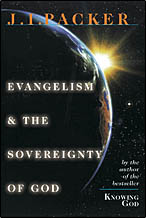
Book Review - Evangelism & the Sovereignty of God by JI Packer


Evangelism & the Sovereignty of God
By JI Packer
Inter-Varsity Press, 1961, rptd 1991
Category: Theology / Evangelism
ISBN: 083081339X
Paperback
126 pages plus Scriptural Index
$12.00 MSRP


Evangelism & the Sovereignty of God is a reprint of an address delivered by JI Packer to the Inter-Faculty Christian Union over forty-seven years ago. Although the message itself is dated in years, the content delivered is as much alive and applicable today as it was to its original hearers. Packer’s intent in this address, two years later published by InterVarsity Press was to deliver “a piece of biblical and theological reasoning, designed to clarify the relationship between three realities: God’s sovereignty, man’s responsibility, and the Christian’s evangelistic duty” (1).

I believe that Packer accomplished his purposes in this address and challenged me to think along lines and pathways that I have yet to previously pursue. Packer begins his address with an appeal to the listeners concerning God’s sovereignty. He calls to the attention of his hearers that all true Christians believe in a sovereign God who is “over all, through all and in all” (Eph 4:6). He displays this truth by appealing to the Christian’s manner of prayer. In prayer, Packer argues, we “confess our own impotence and God’s sovereignty” (2). We believe that God hears and answers prayers in His own way, timing, and for the purposes of His glory, and therefore, we admit that the Lord God is supremely sovereign and is reigning as King over His creation. He then appeals to the prayers that are rendered on behalf of the unconverted. When praying for the unregenerate, we pray that God would save them. Not that the Lord would bring to the point that they then may have the ability to weigh the pros and cons of the life in Christ, but that God would override their wills and save them fully. We pray in such a way because we understand the depravity of the unregenerate heart. The unregenerate heart can not choose the ultimate good for himself, which is eternal life with Christ. This is indeed man’s ultimate need.

Having set this fact in place, Packer then begins to refute the idea that the beliefs in God’s sovereignty and man’s responsibility are at odds or in disagreement with one another. He calls this apparent disagreement an antinomy and defines this as “an appearance of contradiction […] An antinomy exists when a pair of principles stand side by side, seemingly irreconcilable, yet both undeniable” (3). He further clarifies and exhorts his hears to “refuse to regard the apparent inconsistency as real; put down the semblance of contradiction to the deficiency of your own understanding; think of the two principles as, not rival alternatives, but, in some way that at present you do not grasp, complementary to each other” (4). Scripture is clear to teach both views of God’s sovereignty in salvation and man’s responsibility; for it is Christ who says “No one can come to me unless the Father who sent me draws him. And I will raise him up on the last day” (Joh 6:44). On another occasion, Christ says “you refuse to come to me that you may have life” (Joh 5:40). Those who refuse to come to the Lord will be held accountable for their willful decision to reject Christ. Those who do not come to Christ, indeed, do not want to come to Christ, and freely choose not to do so. Packer sums it this way:

“The Bible never says that sinners miss heaven because they are not elect, but because they ‘neglect the great salvation’, and because they will not repent and believe…Those who choose death, therefore, have only themselves to thank that God does not give them life” (5).
All this said, a belief in Divine Sovereignty in salvation and operation does not intrude upon man’s own responsibility to respond to the gospel call and therefore he will receive a just judgment in the final analysis. Moreover, the Christian who believes in the Divine Sovereignty that causes salvation in the elect of God, is not beyond the command to evangelize and share the good news of the Christ’s offer of redemption. Therefore, the Christian must take great pains to ensure that the message he is proclaiming is Scripturally accurate. When faithfulness to Scripture is accomplished, God is glorified, the message is clear, and those who are lost have the opportunity to respond to the gospel. We must then ask, what are the essentials that are to be included the presentation of the gospel? What is the “good news?”

According to Packer, the message must include four lines of truth that are all derived from the same vein. The biblical gospel message is about God, sin, Christ, and a summons to faith and repentance (6). In being about God, the true gospel calls man to the understanding that “In the beginning, God created…” (Gen 1:1). God created the heavens and earth, land and seas, vegetation, light and darkness, and on the sixth day, He created man. And therefore, as God’s creatures, man is therefore naturally under His authority.
“The gospel starts by teaching us that we, as creatures, are absolutely dependent on God, and that He, as Creator, has an absolute claim on us. Only when we learn this can we see what sin is, and only when we see what sin is can we understand the good news of salvation from sin. We must know what it means to call God Creator before we can grasp what it means to speak of Him as Redeemer” (7).
We can then move from God as Creator to the subject of sin. Sin may be understood as anything that is contrary to the character of God. The unregenerate has no desire to conform to the character of God until he comes to an understanding that he is not a product of random chance, as proponents of evolutionary theory suggest. The unregenerate must at least have a glimpse of understanding that he was created with a purpose and that purpose is to point back to the glory of the Creator, and thus, come to an acknowledgement that “all have sinned and fall short of the glory of God” (Rom 3:23). Packer states that “we never know what sin really is till we have learned to think of it in terms of God and to measure it, not by human standards, but by the yardstick of His total demand on our lives”(8).

Once we have instilled the foundation of the message first concerning God as our Creator and then as our sin resulting in a wrong relationship with Him, we can now acknowledge that the gospel message is also about Christ. Packer is quick to point out that we must never present the person of Christ apart from the saving work of Christ, and consequently, we must never present the saving work of Christ apart from the person of Christ(9). These are two important truths to remember when sharing the gospel. The gospel is more than a “get out of hell free” card. The gospel also gives us the greatest gift available, that is, Christ Jesus Himself. He is the greatest good that man could ever desire. Yes, we avoid the pain and torment of eternity separated from Christ, but the pain exists as a result of the separation. In other words, the separation is what causes pain. The greatest news of the gospel is that we get God, not that we do not get hell and damnation.

The fourth ingredient that Packer states as a requirement for an authentic gospel presentation is an appeal to faith and repentance. Both “repentance and faith,” according to the Baptist Faith & Message, a statement adopted by the Southern Baptist Convention, “are inseparable experiences of grace” (10). Repentance by itself is merely a turning away of wrong habits and thinking, but it is faith that then turns towards something. And that something in a Christian’s conversion is the person of the Lord Jesus Christ who offers Himself as the gift of salvation. Consequently, faith by itself is merely belief in a set of facts and conditions, which by itself is not sufficient. As James says, “even the demons believe and shudder!” (Jam 2:19b).

Having laid the foundation for the essential ingredients to a faithful gospel presentation Packer moves on to the motives that should be the driving force behind any individual or corporate evangelism effort. The first motive should be out of a desire to glorify God and the second motive should be out of a love for our neighbor (11). As all things are to be done in order to glorify the Father (1 Cor 10:31; Col 3:17) this should be our aim in our evangelistic efforts as well. Out of love for our neighbor we will respond with the desire for their eternal state to be realized before the Day of Judgment appears. It is unhealthy for any Christian to desire the judgment of eternal separation to fall on any man, regardless of the heinousness of any sins he or she may have committed. Therefore, it should be the desire of all Christians to see the spread of the truth of the gospel to all nations and all peoples, first for the glory of the Father and the Son whom He sent, and second out of a genuine concern for humanity. It is a true statement that all societies would benefit if all of its members were genuine Christians. Packer confronts those who may not indeed have a genuine concern for the glory of God and the good of his or her neighbor by reminding us that “if we find ourselves shrinking from this responsibility, and trying to evade it, we need to face ourselves with the fact that in this we are yielding to sin and Satan” (12). As one who struggles with his evangelistic efforts, this was a sobering reminder. I must be reminded that there is no neutral ground when dealing with matters of salvation. If I am a faithful witness for Christ out of a compulsion to see Him glorified in all things and out of overflowing love for my neighbor, I am essentially denying the grip of sin on my life and reminding Satan of his impending doom. However, if I am not a faithful witness for Jesus Christ as a result of my message not being clear, or if my motives are not properly Christ-centered, then I am an advocate for the enemy and Christ is not honored.

Packer then concludes his argument with two simple, straightforward statements that must always be at the forefront of any discussion concerning the Sovereignty of God and Man’s Responsibility as it relates to evangelism. He says, “1. The sovereignty of God in grace does not affect anything that we have said about the nature and duty of evangelism"(13) and “2. The Sovereignty of God in grace gives us our only hope of success in evangelism” (14). He says, in essence, because God is sovereign and is therefore ultimately in control of the eternal destinies of each of His creatures, this fact does not negate the need for His children to evangelize a lost and dying world. The reality still exists that God has chosen to use men and women throughout redemption’s history in order to magnify the Lord and bring others into a saving relationship with Him. Ultimately, it is the Holy Spirit who effects a work of regeneration in the life of an unbeliever, and it is the Holy Spirit who divinely intervenes to enable conversations concerning spiritual matters to even begin or develop. Also, it should always be remembered that it is because of God’s sovereignty that we evangelize, not in spite of it. As Packer says, the only hope of any success is that God has sovereignly chosen to set His grace on those of His elect. As a result, “as many as were appointed to eternal life” (Acts 13:38) will respond to the gospel at the proper time. The sovereignty of God should be a staunch motivator to compel us to share the gospel with others. Yes, our message must be clear, but ultimately, it is the work of the Sovereign God who brings us to repentance.

Evangelism & The Sovereignty was a delight to read and refreshment to my spirit. Over the last few years, the Lord has brought me into an understanding that He truly is sovereign, and that He truly is Lord of all. However, at times this has been to my detriment as I have neglected my personal duty and delight in witnessing to the great news of Jesus Christ. I have failed to boldly proclaim His truths among the nations and have erred on the side of seeing God’s sovereignty as a means to which evangelism would be stunted. I have known that this is erroneous thinking, and Dr. Packer has helped me to put these thoughts back into a proper, God-honoring, biblical focus. I take from this reading a reminder to always be about my Father’s business and that business is to do all things for His glory and for the purpose of making Christ known. Every conversation is to be full of grace and seasoned with salt (Col 4:5) and I pray “that God may open a door for the word, to declare the mystery of Christ” (Col 4:3) and that I may be bold in the power Christ and for the purposes of Christ, to walk through such a door.

Notes:
1 Packer, JI. Evangelism & The Sovereignty of God. Downers Grove, IL: InterVarsity Press, 1961. p 7.
2 Ibid. p 12
3 Ibid. p 18
4 Ibid. p 24
5 Ibid. p 105-106
6 Ibid. p 58-73
7 Ibid p. 59
8 Ibid p. 60
9 Ibid p 63-66
10 The Baptist Faith & Message. Nashville, TN: LifeWay Press, 2000. p 11.
11 Packer, JI. Evangelism & The Sovereignty of God. Downers Grove, IL: InterVarsity Press, 1961. p 73-82
12 Ibid. p 77
13 Ibid. p 96
14 Ibid. p 106

Read Complete Article...

Tuesday, October 03, 2006

Fighting Sin

Question: “How does the fight against sin change as the years go by? Easier? More joyful? More subtle? More Christ-centered?”

Response: “I suspect that everyone will find that his struggle with sin changes over time as he grows in wisdom. For me growth has been painfully slow, and it’s only when I stop and look carefully back over decades that I can see changes that remind me that God is at work. I wouldn’t say that anything has become easier, but I like your phrase “more joyful”—for it is increasingly so. The joy comes in times when I am less interested in figuring out how much I love God, and more delighted in the too-good-to-be-true truth that God loves me. And what has stirred me lately is that my increasing assurance of God’s love—built on more frequent reflection on the depths of the gospel of grace—steels me against temptation more than any fasting or self-discipline ever did.”

This was taken from an interview between Tony Reinke (pastor/blogger) and Kris Lundgaard (author of two books, The Enemy Within and Through the Looking Glass).
Full interview found here.

Read Complete Article...

Thursday, August 17, 2006

Facedown... by matt redman

“Welcomed in to the courts of the King
I’ve been ushered in to Your presence
Lord, I stand on Your merciful ground
Yet with every step tread with reverence

And I’ll fall facedown
As Your glory shines around
Yes, I’ll fall facedown
As Your glory shines around

Who is the in the heavens like You?
And upon the earth, who’s Your equal?
You are far above, You’re the highest of heights
We are bowing down to exalt You

And I’ll fall facedown
As Your glory shines around
Yes, I’ll fall facedown
As Your glory shines around

So let Your glory shine around
Let Your glory shine around
King of glory, here be found
King of glory”

“…and the glory of the LORD appeared to all the people. And fire came out from before the LORD…and when all the people saw it, they shouted and fell on their faces” (Leviticus 9:23, 24 ESV)

“Therefore God has highly exalted Him and bestowed on Him the name that is above every name, so that at the name of Jesus every knee should bow…to the gory of God the Father.” (Philippians 2:9, 10, 11)

“Holy, Holy, Holy is the LORD of Hosts; the whole earth is full of His glory!” (Isaiah 6:3)

Read Complete Article...

Tuesday, August 01, 2006

Greatness

“For our appeal does not spring from error or impurity or any attempt to deceive, but just as we have been approved by God to be entrusted with the gospel, so we speak, not to please man, but to please God who tests our hearts. For we never came with words of flattery, as you know, nor with a pretext for greed – God is witness. Nor did we seek glory from people…” 1 Thessalonians 2:3-6a ESV


I desire to be great. I desire to be recognized. I desire to be published, quoted, requested to visit, speak, confer, and be consulted. I desire glory. Although these words may not find themselves expressed in their purest forms, the thoughts and attitudes that cause their utterances are almost always present. An unseen and unspoken war of the words transcribes that I dare not speak of lest I succumb to its forces. This imaginary force will not destroy me per se, but it might just destroy my reputation, my image, and my external appearance of humble piety. And thus the “me” of the internal never greets the “me” of the external for the outward perception is of utmost importance if my desire for greatness is to be achieved. Consequently, what is real is not what is seen and my existence is reduced to a moving picture of sorts – a life not mine, but an escape from authenticity that leaves me, well, reeling.

Honesty is the greatness of titanic extremes. As I plunge the depths of my soul and the inner caverns of my own heart, I must readily acknowledge with brutal honesty the reality of the seen and the unseen. A physician would be of no benefit to me if he were to diagnose my common cold and fail to reveal to me that the cause of my cold is a weakened immune system caused by a certain class of cancer. Cough drops or chemotherapy? There is hardly a justification for limiting the physician’s honesty of the examination. Therefore, in diagnosing a spiritual condition, I need not trivialize the assessment, but to invite and welcome its findings as a means of greater maturity; for to be great, I must first be honest.

All this held, one need not consult an expert in exegesis to understand the Biblical ramifications of pride in the heart of man. “God opposes the proud” (James 4:6). “Pride goes before destruction” (Pro 16:18). And was it not pride that caused the tempter to be cast from the glories of Heaven (Is 14:14-15) to a place where his simple statement “you will be like God” (Gen 3:5) invoked such a prideful desire that sin then entered the entirety of the human race for all generations to come before Christ comes again? And so, can I agree with Holy writ that my prideful desire for greatness based on my own merit is indeed sinful and wretched? Indeed. Can I observe from sacred Scripture that even those closest to the Lord Himself struggled with the improper desire for greatness to which the Lord responded, “whoever would be great among you must be your servant, and whoever would be first among you must be slave of all. For even the Son of Man came not to be served but to serve, and to give His life as a ransom for many” (Mark 10:43-45)? I must also concur with a resounding yes. And therefore, I trust that there is hope for me nonetheless.

The struggle with greatness is not altogether new, but each time it presents itself in cleaner clothes and with greater subtleties. This most recent occurrence came at a time with an opportunity to participate in the spreading of the Gospel of Christ and to truly affect His kingdom for His glory. Yet my heart was not in tune with the symphony of Scripture and my desire for greatness eclipsed my desire to see Him increase and me decrease. Under this conviction, I approached this passage in Paul’s letter to which I was required to respond with the honest sinfulness of my heart. Had I engaged in the opportunity I would not have done so to “please God who tests [my] heart” (1 Thess 2:4), but I would have done so in an effort to please man and to seek glory from people. It was not until I encountered this passage of Scripture that I was willing to openly admit my fault, yet my response was not proper. Rather than be honest with the organizer concerning the condition of my heart, I simply did not show up. Sin #1: Pride that led to the desire to be recognized as great. Sin #2: Pride that led to not honoring my commitment. Sin #3: Pride that led to my inability to be honest for fear that the true me might become exposed.

God in His grace that leads to conviction granted me the repentance to confess my fault before Him and He also graciously provided the opportunity to confess my wrongs to the two organizers. I ignored the command to “let my yes be yes” and honor my commitments despite the pain I may have to endure to reveal the darkness of my heart.

I can have greatness by the world’s standards, but it will come at the cost of honesty. If true honesty leads to greatness, may the Lord continue to guide me along that path. And, prayerfully, may my next appeal spring not from error or impurity or any attempt to deceive, but from a desire to please God, not man, for He is the One who tests my heart. May I seek His glory and His approval only, that I may be entrusted with the Gospel – the greatest gift of honest good news.

Read Complete Article...

Friday, July 21, 2006

Accountability

“Because we are worshipers by nature, we are always (1) giving proper worship to God, (2) serving something [or someone] else, or (3) worshiping ourselves, demanding to be the center of our own universe.”

- Paul David Tripp. Instruments in the Redeemer’s Hands: People in Need of Change Helping People in Need of Change. Phillipsburg, NJ: P&R
Publishing, 2002. p 46


In light of this reality, I need to ask myself these questions and then ask these questions of those who give me the passport of accountability:

1. This past week, have I given God proper worship in all areas of my life? (Mat 22:37)
2. Can I honestly say that I have done all things for God’s glory this week? What areas or situations could have been handled differently in order to align myself with the truth that I am to do “all for the glory of God” (1 Cor 10:31)? Are any of these things still good things, but just done out of improper motives? (Mat 6:1-8)
3. In what ways have I attempted to please other people at the expense of transferring my worship to them, their opinion, or their influence instead of worshiping Christ? (Gal 1:10; 1 Thess 2:2-6)
4. Which situations this week provided an occasion for me to choose between pride and humility? How did I choose? Was this the proper response? (Luke 14:11; James 4:6; 1 Peter 5:6) What Scripture passage can I refer to support my decision?
5. Have I sought forgiveness from the Lord for any of the above situations that resulted in my sin? Are any of the above situations sins that I need to confess to the individuals involved and seek their forgiveness and restoration in the relationship? (Mat 18:15-20). When am I going to walk through this process?
6. Is there a passage that I need to meditate on this week and apply that will cause me to respond more like Christ in any of the above situations? What steps am I going to take to make sure that I follow through with this commitment? (Mat 5:37) Who can I enlist to help me in this endeavor? (Pro 27:17; Gal 6:2)


Although these questions may not be new by nature, they may be new by application for my life. In discussing the nature and practicality of accountability over the last several weeks I have come to an understanding that I need to be more proactive and seeking accountability in my own life. The Lord has graciously chosen to provide for me brothers who are committed to seeking a greater relationship with Christ through the process of accountability. It has come a time when I need to utilize this tool as one who wants to take his relationship with Christ seriously.


May Jesus Christ make men like Him

Read Complete Article...

Tuesday, June 06, 2006

Some Thoughts on Sanctification...

Again, obviously not an exhaustive thought progression, merely an initial go…


The act of sanctification, or sanctifying, finds its roots in the beginning of recorded history with Creation. When God had finished creating the heavens, the earth, the light, the dark, the waters, the dry land, the male, and the female “He rested on the seventh day from all His work which He had done. Then God blessed the seventh day and sanctified it, because in it He rested” (Gen 2:2-3, emphasis mine). By sanctifying the seventh day, God called this day - the Sabbath day - holy, and set it apart from the other six days of the week. He declared the Sabbath day to be “other than” or “different” from the rest of the week where certain functions were performed and others were set aside for the day. The Hebrew word for sanctified is “qadash” which means “to be set apart or consecrated” (Strong’s, 6942, “qadash”). Vine’s adds that “in the primary stem the verb signified as act, whereby, or a state wherein, people or things are set aside for use in the worship of God” (Vine’s, “To Sanctify”, 210). God set aside the Sabbath Day so that on this day He would be worshipped. The Sabbath was created for man to receive rest from his labors and to focus his heart and mind on the Giver of Life and the ability to work. This act of worship on the Sabbath was not to come to the detriment of worship the other six days of the week, but on the Sabbath there was a special time of communal fellowship where the people of God were gathered together to worship Him as the family that they are.

When the Tent of Meeting and the Tabernacle were later established, God chose to have certain items and people sanctified for service in the temple. The Levites were the chosen descendants of Jacob who were called to be the priestly servants of God. These Levites were given the task of performing the sacrifices as an offering of worship to God for the cleansing of sins (Ex 27-30). As was from the beginning, sanctification was an element of worship to God Almighty. He sanctified the Sabbath and commanded that it be observed as a day of worship (Ex 20:9-11) and as a result, He also prescribed the way in which He was to be worshipped. God declared to Moses which items should be used in the service of the temple, how the priests were to be dressed, what elements should be available for them, and how they were to act while in the presence of His Divine Glory. The Tabernacle had its inner chamber, the Holy of Holies, signifying that this part was consecrated, set apart, and sanctified for the exclusive presence of the Lord. It was the center of worship and sanctification is necessary for proper worship.

Sanctification is inseparable from God’s act of justification and is indeed subsequent to this act. God justifies the sinner and declares him to be “not guilty” before Him. This justification, however, does not deal with the inward nature of man, but only with the external, in its judicial sense. Sanctification, is the result of God’s Spirit working within the life of a regenerated believer in order to change the believer to conform to the image of Christ. Wayne Grudem in his Systematic Theology defines sanctification as “a progressive work of God and man that makes us more and more free from sin and like Christ in our actual lives” (746). This freedom is what enables the regenerate believer to properly worship Christ.

In the New Testament, we see the continuation of God’s initiating act of sanctifying or setting apart of individuals of His choosing for worship. The Greek words “hagios” and “hagiazo”, and “hagiasmos” are used to render the idea of consecration, sanctification, and the act of making something holy (Strongest 37, 38, 40). Thus, God’s desire for His own glory has continued throughout the centuries and now lies in the hearts of those for whom Christ died. “But now having been freed from sin and enslaved to God, you derive your benefit, resulting in sanctification, and the outcome, eternal life” (Rom 6:22 NASB). In this verse we see that Paul is clearly stating that there is a definite beginning, a continuation, and an ending point of sanctification that results in eternal life and each deals with the aspect of worship in the believer.

Prior to sanctification, there were those whom God foreknew “before the foundations of the world” (Eph 1:4) and “those whom He foreknew, He also predestined to become conformed to the image of His Son […] and these whom He predestined, He also called; and these whom He called, He also justified…” (Rom 8:29, 30). As an act of His grace, God chose to reveal Himself to those whom He has chosen and as a further act of His grace He chose to declare them “not guilty” in regards to the eternal condemnation of sin. This act of justification, however, did not leave the individual sinner any more or less conformed to the image of Christ than he was immediately prior to his acquittal. Therefore, God acted within the life of the new believer to cause the new birth, or regeneration, enabling the new creation (2 Cor 5:17) to respond rightfully to God’s working of grace. In Peter’s words, “Blessed be the God and Father of our Lord Jesus Christ, who according to His great mercy has caused us to be born again to a living hope through the resurrection of Jesus Christ from the dead” (1 Pet 1:3). To be “born again” signifies a new beginning, a fresh start, and a new perspective. And as a result of this new life in Christ, there is a turning from the old ways of life – a life wrought with sin.

      “This initial step in sanctification involves a definite break from the ruling power and love of sin, so that the believer is no longer ruled or dominated by sin and no longer loves to sin […] to be dead to sin or to be set free from sin involves the power to overcome acts or patterns of sinful behavior in one’s life” (Grudem 747).

This is, indeed, an initial step and is not to be considered as the last step or a once and for all step. True, “there is now no condemnation for those who are in Christ Jesus” (Rom 8:1), however, there is still a sin nature that is a part of every human – believer or nonbeliever. The advantage for the believer is that he now possesses the power afforded to him to choose not to sin and to choose the power of the Holy Spirit, “who is given as a pledge of our inheritance, with a view to the redemption of God’s own possession” (Eph 1:14) from the point of regeneration onward. And it is from this point that the new believer is enabled not only to live under the grace of God, but to do so, and rightly worship the Triune God fully.

The act of sanctification in the believer does not only have a definite beginning “having been freed from sin” (Rom 6:22) but it is a continual process. Never on this side of eternity will an individual be able to say that he or she has defeated sin once and for all, or that he or she has mastered any particular sin for “pride goes before destruction, and a haughty spirit before stumbling” (Pro 16:18). The process of sanctification in the life of the believer continues throughout the believer’s life. It is through this process of sanctification that the new believer will “derive [his] benefit” (Rom 6:22) as the believer understands more fully the depth of his sin, his need for a savior, and an appreciation for the work that has been done for him by the work of Christ. All of this results in greater worship of God the Father Almighty.

The Holy Spirit is the agent of sanctification in the life of the believer as He is the One who will “convict the world concerning sin and righteousness and judgment [and] will guide [all believers] into all truth” (Joh 16:8, 13). Through this process of conviction, the Holy Spirit is revealing thoughts, attitudes, and actions within the life of the believer that are not in accordance with the character of Christ. He also is empowering the believer with the grace to boldly approach the throne of grace with confidence knowing that he may confess his transgressions to God and be cleansed from all his iniquity (2 Chr 7:14; Heb 4:16; 1 Joh 1:9). As John Murray states,

      “Indeed, the more sanctified the person is, the more conformed he is to the image of his Saviour, the more he must recoil against every lack of conformity to the holiness of God. The deeper his appreciation of the majesty of God, the greater the intensity of his love to God, the more persistent his yearning for the attainment of the prize of the high calling of God in Christ Jesus, the more conscious will he be of the gravity of the sin which remains and the more poignant will be his detestation of it” (Murray 145).

Again, the process of sanctification has in its view the proper worship being ascribed to God Almighty. Without the quickening of the Holy Spirit who affects His ministry of conviction, the sinner would be lost and without direction in how he is to live a life of worship. Without God’s agent of sanctification through the power of the Holy Spirit he would be unable to not be “conformed to this world” (Rom 12:2a), unable to be “transformed by the renewing of [his] mind” (Rom 12:2b), and unable to “prove what the will of God is” (Rom 12:2c) and therefore unable to set his mind on the things of the Spirit (Rom 8:5-8). And a mind not set on the things of the Spirit is a mind void of worship.

Sanctification has a definite beginning and is in a perpetual state of continuance in the life of the believer. But when will this sanctification process end? When will the believer finally cease to sin? The only answer that satisfies is when the believer inherits the “eternal life in Christ Jesus our Lord” (Rom 6:23). This inheritance will be fully realized at some point after the physical death of the believer or when Christ returns for His Church – whichever occurs first and will result in true worship of the Maker and Savior. Because sinners live in a life constrained by the effects of sin, all are unable to truly worship Christ for who He is. When this tarnish of sin is removed from the internal being of the sinner, he will truly and rightly be able to cry with all of the redeemed

      “Great and marvelous are Your works, O Lord God, the Almighty; righteous and true are Your ways, King of nations! Who will not fear, O Lord, and glorify Your name? For You alone are holy; for all the nations will come and worship before You, for Your righteous acts have been revealed” (Rev 15:3-4).

Before this time, the believer may worship only in part and must wait until the time when God’s act of redemption is fully accomplished and results in the believer’s complete sanctification. For before this time,

      “although the believer is made a new creature, is translated from the kingdom of darkness into the kingdom of God’s dear Son, he is but partially sanctified; that his selfishness, pride, discontent, worldliness, still cleave to , and torment him; that they effectually prevent his ‘doing what he would’[Rom 7:14-25], they prevent his living without sin, they prevent his intercourse with God being as intimate and uninterrupted as he could and does desire” (Hodge 224).

Therefore, when God has completed His work of sanctification in the life of a believer God will finally receive the true, just, and deserved worship that He desires from His children. It is not until this point - the point of true worship – that the believer fully sanctified.

God instituted the act of sanctification, by setting apart days, articles, and people, for the act of worship. He has always had in mind the act of sanctification to be set apart for the worship of Himself and to see all things done for His own glory. This sanctification, however, does not come completely at once but has a definite beginning, a gradual progression, and a definite ending point. Until the end, God will not receive the true worship that He desires and the believer’s aim should be to work in accordance with His Spirit, responding to the “energizing power that God exerts upon and within the righteous which enables them to serve Him acceptably” (Pink 80). This “energizing power” is the power of the Holy Spirit, given to all new creatures in Christ; given so that He might prompt the proper worship of the Almighty God who has chosen, set apart, and sanctified His children by calling them to worship.

Works Cited
Grudem, Wayne. Systematic Theology: An Introduction to Biblical Doctrine. Grand Rapids, MI: Zondervan Publishing House, 1994.
Hodge, Charles. Systematic Theology in Three Volumes: Part III Soteriology. Peabody, MA: Hendrickson Publishers, 3rd prntg. 2003.
Holy Bible: New American Standard Bible-Updated Edition. Grand Rapids, MI: Word Publishing, 1995.
Murray, John. Redemption: Accomplished and Applied. Grand Rapids, MI: Eerdmans Publishing Company, 1955.
Pink, Arthur W. The Sovereignty of God. Carlisle, PA: The Banner of Truth Trust, 1928, rptd 1998.
The Strongest NASB Exhaustive Concordance. Grand Rapids, MI: Zondervan Publishing House, 2004.
Vine, W.E. Vine’s Complete Expository Dictionary of Old and New Testament Words. Nashville, TN: Thomas Nelson Publishers, 1996.

Read Complete Article...

Tuesday, May 30, 2006

Welcome to Your Late 20's!

On May 27th, my wonderful wife turned twenty-seven years old and is now officially in her “late twenties.” In light of this - in no particular order whatsoever - here are 27 reasons I love my wife:

1. She understands what I mean when I say the number “two” and nothing else.
2. She is loyal. (If you don’t know this, you don’t know my wife.)
3. She laughs at my not-so-funny jokes…or maybe she’s laughing at me… (If you don’t know this, you don’t know me!)
4. She is dependable.
5. She is forgiving.
6. She loves Jesus more than me.
7. She is independent.
8. She’s a snazzy dresser, but likes her jeans and hoody just as well.
9. She likes to play tennis.
10. She thinks and has opinions of her own.
11. She loves ice cream.
12. She likes coffee.
13. She loves to read (and drink coffee) for hours on end.
14. I love to be with her. To sit, laugh, and enjoy one another…and amazingly, I think she really likes to be with me too.
15. She is nurturing in that she loves to take care of me.
16. She knows that I like Scooby snacks.
17. She is not afraid to admit she doesn’t know everything (unlike her husband who thinks he knows it all)
18. She is willing to confess that she is wrong and ask for forgiveness.
19. She is teachable and loves to learn.
20. She is schedule oriented and has the ability to prioritize (also unlike her husband)
21. She doesn’t jump on the band wagon of the latest fad.
22. She believes that the Easter Bunny and Santa Claus can come to our house without having a royal rumble with Jesus. And if they did, Jesus would kick tail.
23. She likes to sing senseless songs for no one else’s entertainment than our own.
24. She can define “Kumbaya” in a hundred different ways given the context.
25. She makes the choice to love me everyday.
26. She understands the importance of allowing me to lead our relationship even though I make constant mistakes.
27. She is my best friend, my wife, and my family.

These are only twenty-seven of the unnumbered list of character traits explaining why I love my wife. And the list keeps growing every day. I love you, Mrs. Armstrong. I hope you had a wonderful birthday despite my frustrations which almost caused the death of us and in turn a drowning of sorrows in a Twix ice cream bar. But we found $6.00!!

Read Complete Article...